
Report and analysis on the Rotary Club of Admiralty members opinion survey
Membership Opinion Survey Overview
An online questionnaire using Google Forms was distributed to all 33 registered members of the club. Despite reminders sent via the administrative secretary, only 12 responses (36.4%) were received. Analysis shows respondents primarily represent frequent participants, while less active members remain underrepresented. This may skew results toward perspectives of more engaged members. While these insights are valuable for understanding core participants’ views, additional efforts should be made to capture input from infrequent attendees to ensure balanced decision-making that serves all membership segments.
Club Meeting Preferences Analysis
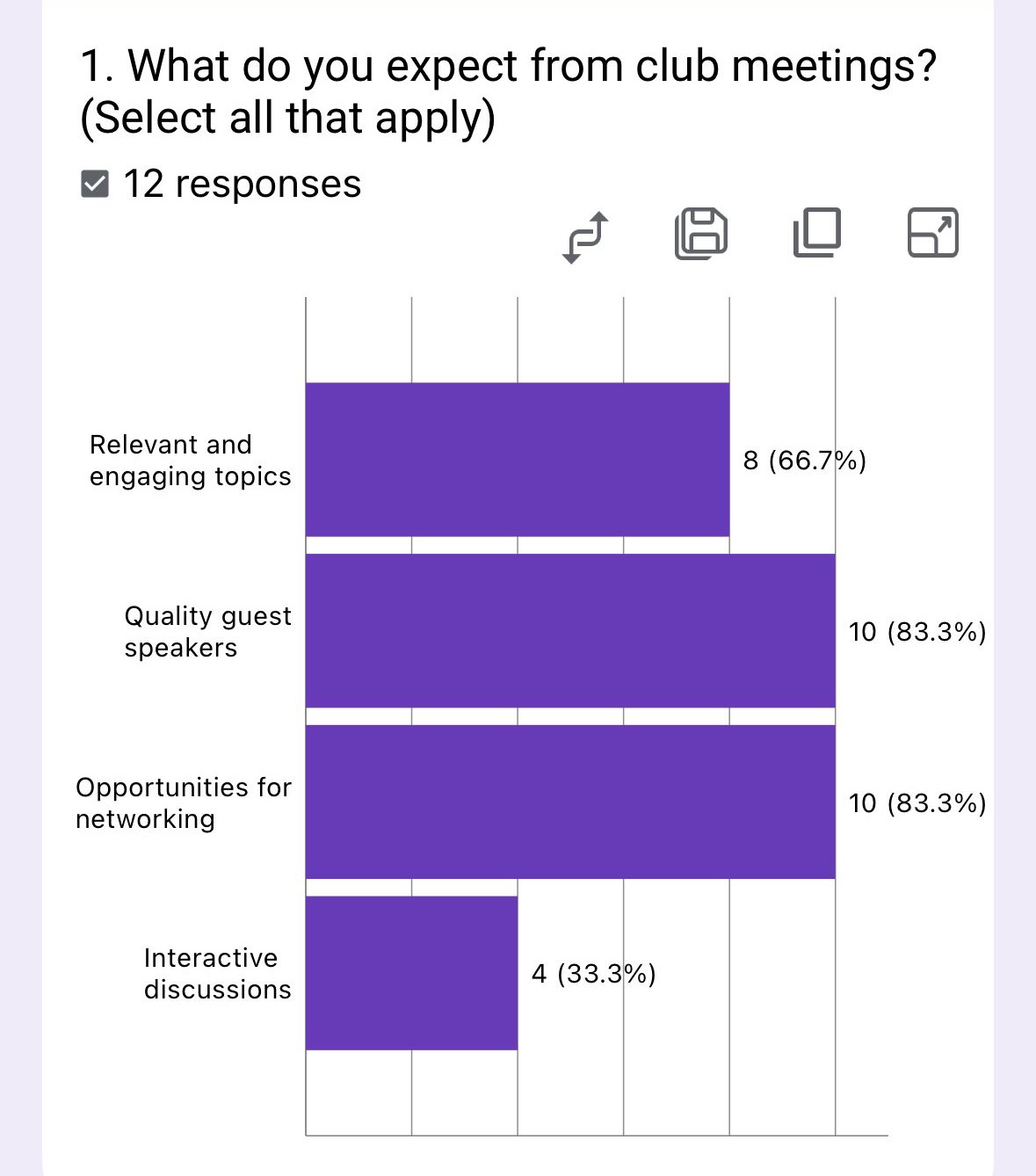
The survey results highlight clear member priorities: 83.3% value guest speakers and networking, while only 33.3% prefer interactive discussions. This suggests members attend primarily for expert insights and professional connections. To optimize meetings, we recommend:
- Maintaining the current speaker-focused format (high satisfaction)
- Adding structured networking sessions (10-15 minute dedicated slots)
- Converting some discussions to Q&A formats (more engaging than open-ended debates)
- Including 1 interactive element per meeting (e.g., small-group exercises) to gradually boost engagement without alienating attendees who prefer passive learning.
Fundraising Event Expectations Analysis
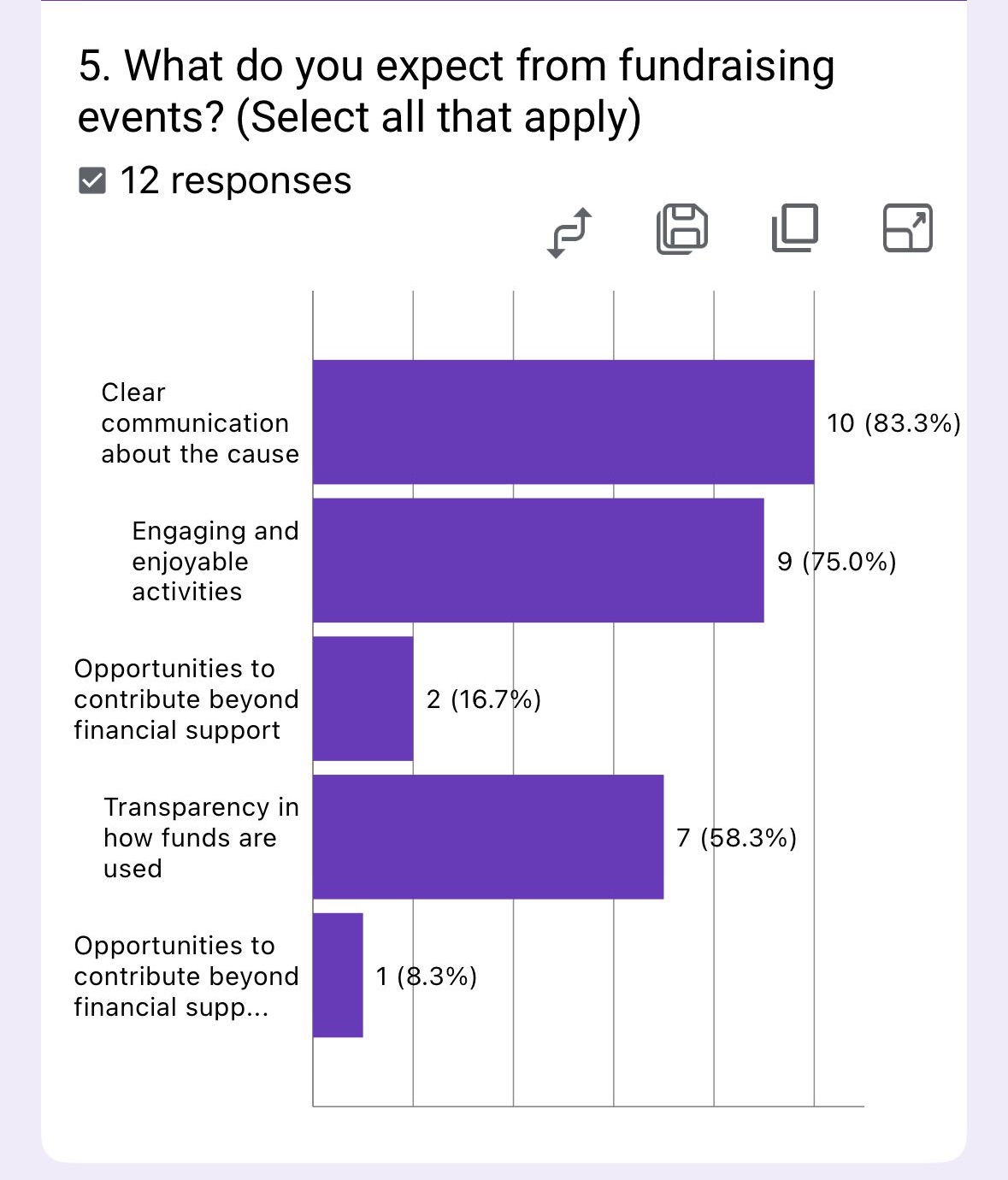
Survey results from 12 members show clear priorities for fundraising events: 83.3% value clear communication about the cause, while 75.0% want engaging activities. Transparency in fund usage is important to 58.3%, but non-financial contribution opportunities rank low (16.7%). Recommendations:
- Develop detailed pre-event communications explaining the cause’s impact,
- Design fun, participatory activities to boost engagement,
- Provide post-event reports showing fund allocation, and
- While maintaining focus on financial goals, consider adding 1-2 meaningful non-monetary contribution options per event to cater to all member preferences.
What do you expect from fundraising events?
Fellowship Objectives Analysis
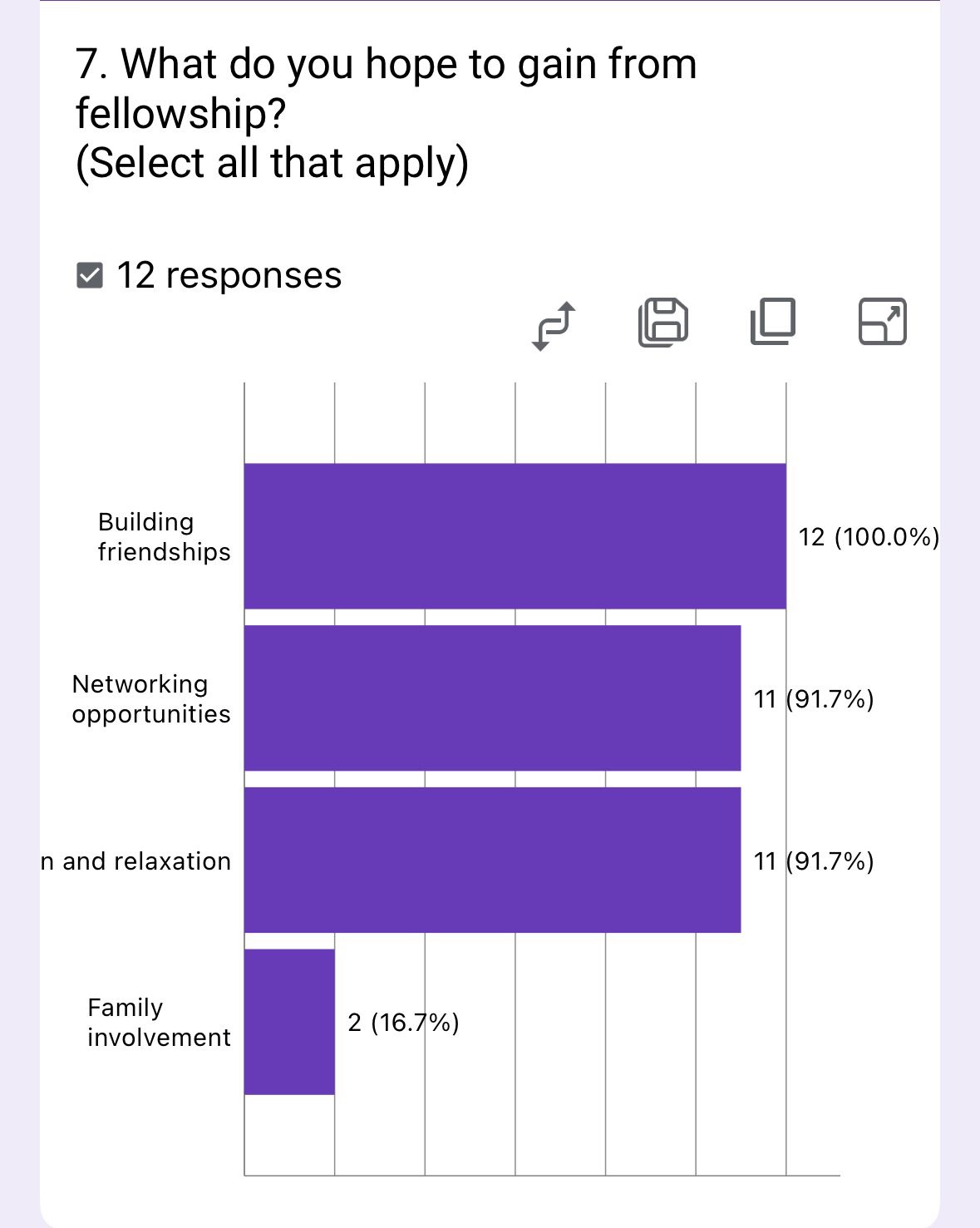
The survey of 12 members reveals overwhelming emphasis on social connections, with 91.7% seeking both friendships and networking opportunities through fellowship. Family involvement was significantly less prioritized (16.7%).
Recommendations:
- Design regular social mixers and networking events to facilitate connections,
- Create structured mentorship programs to deepen relationships,
- Develop interest-based subgroups for more organic bonding,
- While maintaining the adult-focused approach, consider adding 1-2 family-inclusive events annually to accommodate the minority interested in family participation, and
- Implement a buddy system for new members to accelerate relationship-building.
What do you hope to gain from fellowship?
Fellowship Importance Analysis
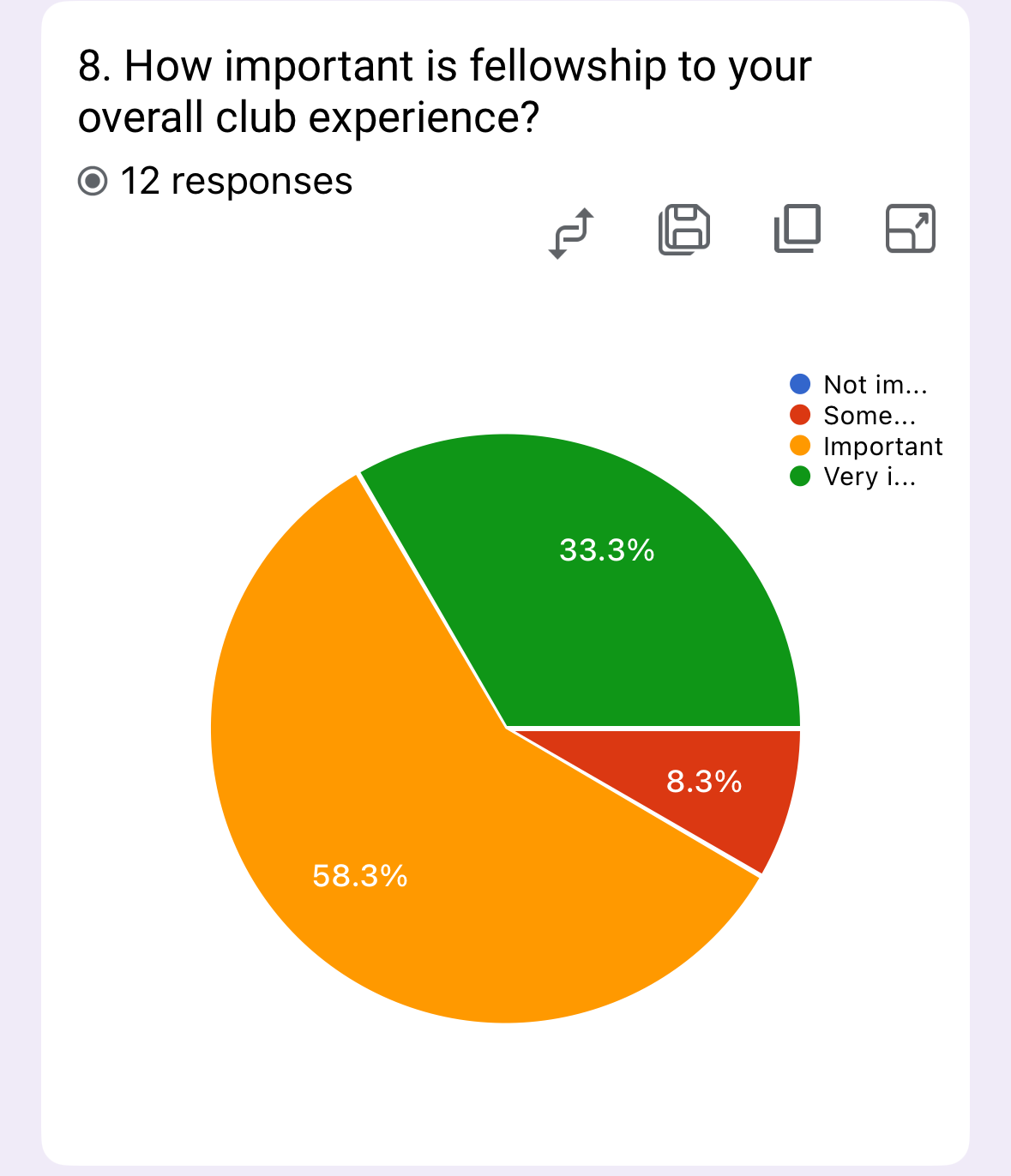
The survey reveals fellowship is highly valued in the club experience, with 58.3% rating it as “Very important” and 33.3% as “Important.” Only 8.3% consider it somewhat important. These results demonstrate fellowship is a critical component for the majority of members. Recommendations:
- Increase the frequency of fellowship events,
- Create diverse formats (social, service-oriented, skill-building) to appeal to different interests,
- Designate fellowship ambassadors to welcome new members, and
- Allocate more club resources to fellowship programming while maintaining balance with other club priorities.
How important is fellowship to your overall club experience?
Member Engagement Priorities Analysis
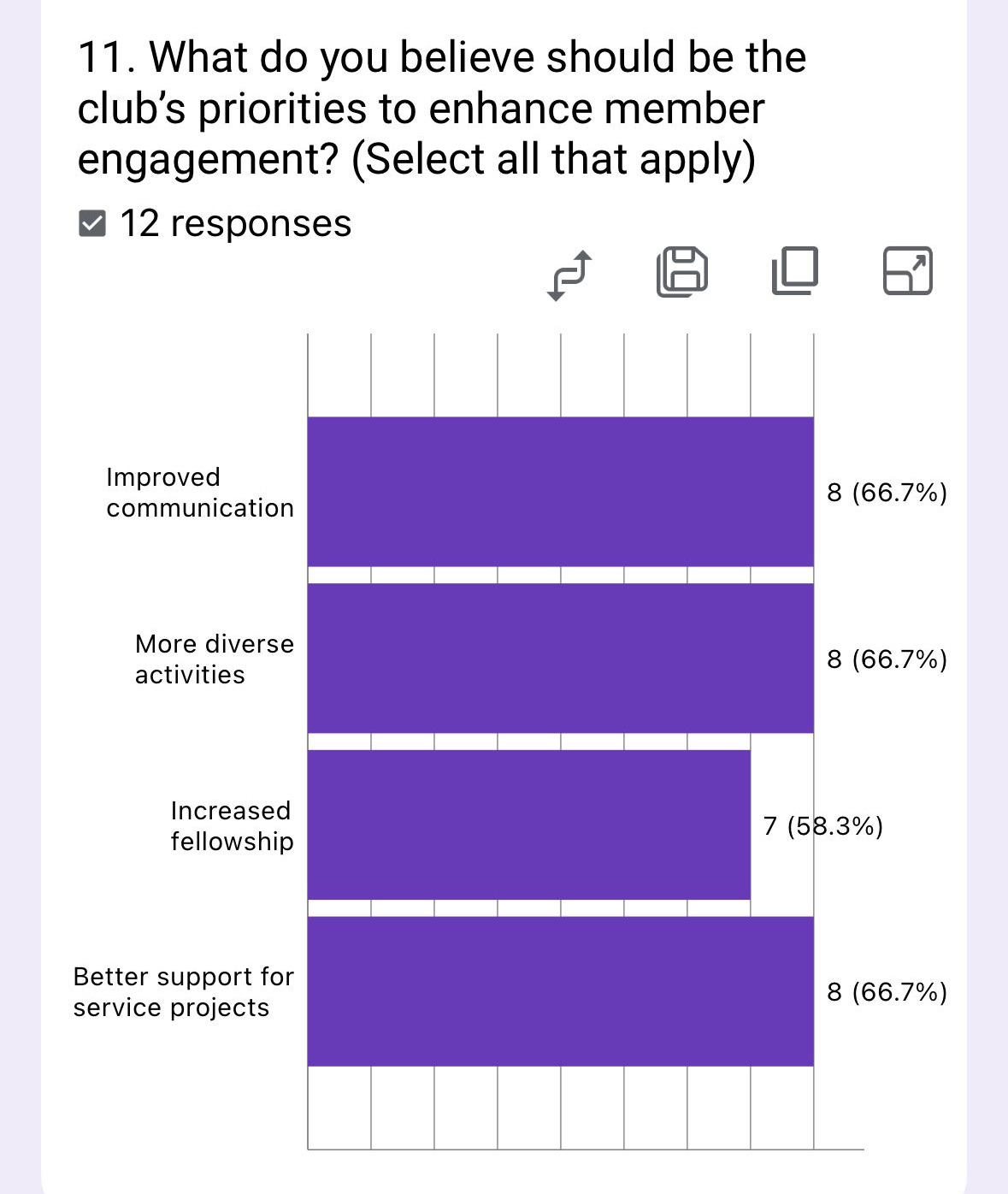
The survey of 12 members reveals three equally important priorities for engagement (66.7% each): improved communication, diverse activities, and better project support, followed closely by fellowship (58.3%).
Recommendations:
- Implement a multi-channel communication strategy (email, app, in-person updates),
- Develop a quarterly activity calendar with varied formats (social, educational, service),
- Create a project support team to assist with logistics and resources, and
- Maintain the current fellowship offerings while exploring new connection-building formats. This balanced approach addresses all key areas while respecting the slightly higher preference for structured activities over pure social engagement.
What should be the club’s priorities to enhance member engagement?
Membership Satisfaction Analysis
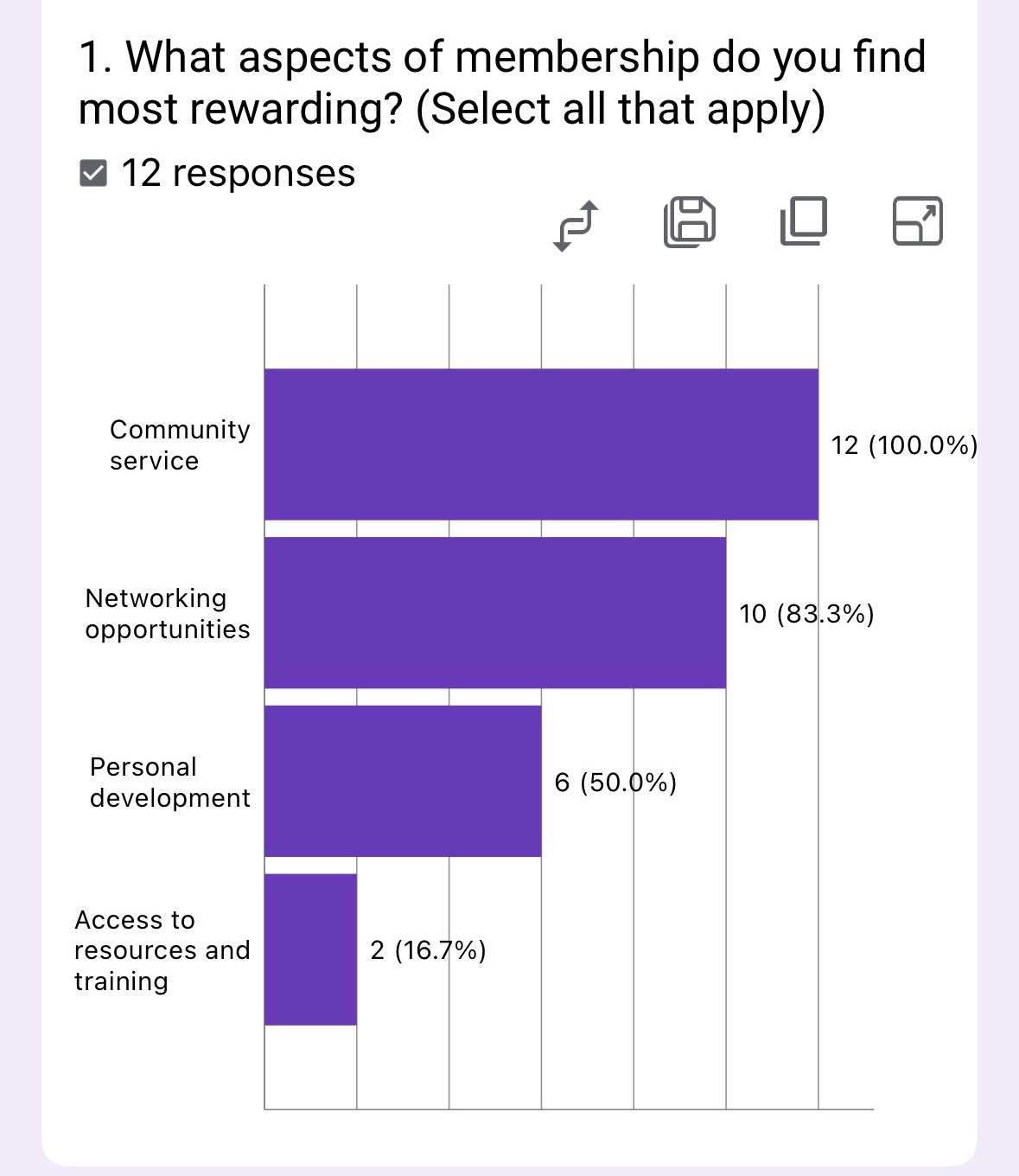
The survey highlights unanimous appreciation for community service (100%) as the most rewarding membership aspect, followed by networking (83.3%). Personal development (50%) and access to resources (16.7%) were less emphasized.
Recommendations:
- Maintain and expand service opportunities as they are universally valued,
- Continue developing high-quality networking events,
- Offer optional personal development workshops for interested members, and
- While resource access isn’t a priority for most, ensure existing resources are well-publicized. The data suggests members primarily value outward-focused benefits (service, networking) over inward-focused benefits (personal growth, resources).
What aspects of membership do you find most rewarding?
Membership Satisfaction Analysis
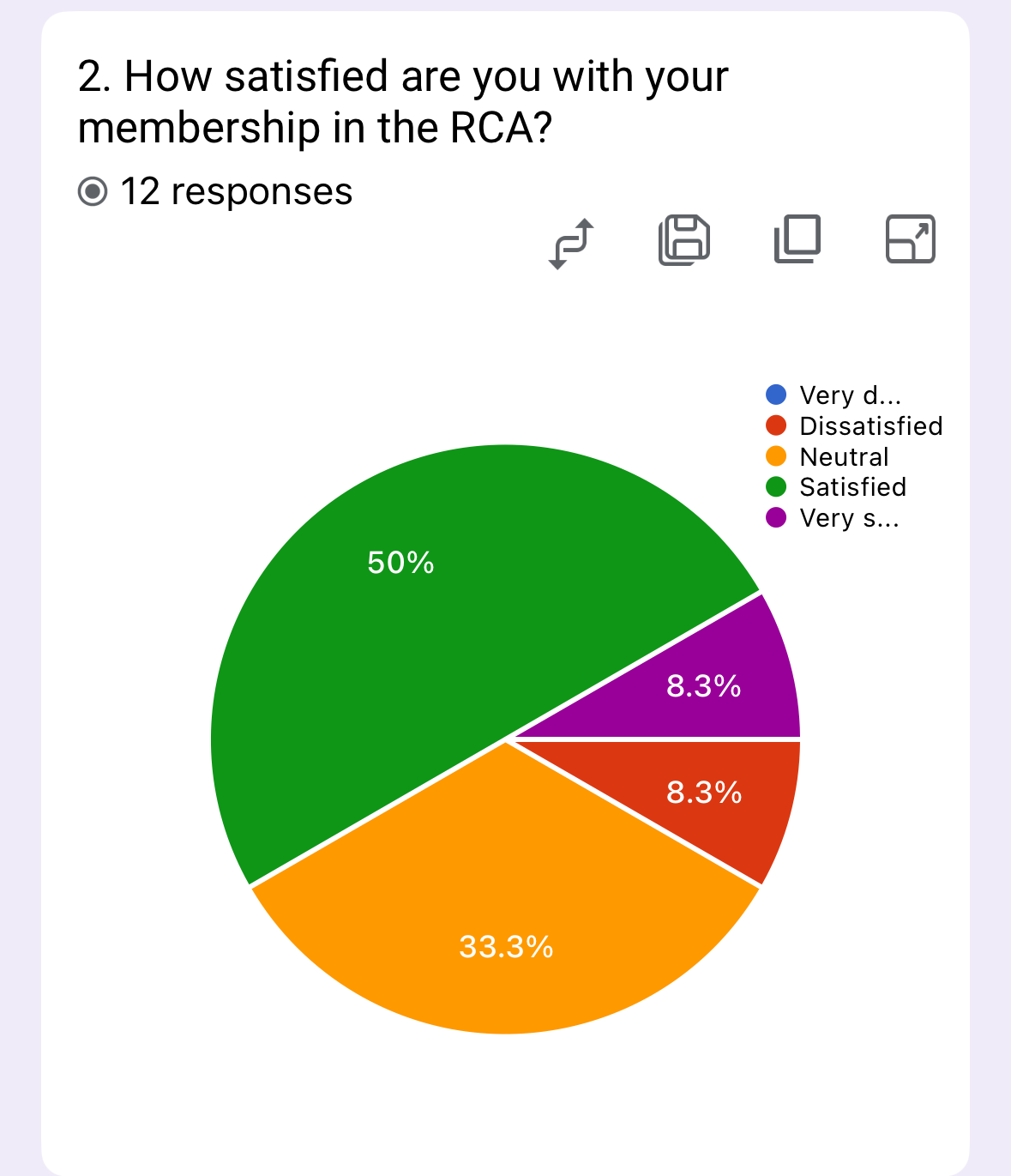
The survey shows moderate satisfaction levels: 50% are satisfied while only 8.3% are very satisfied, with a significant neutral group (33.3%) and a small dissatisfied segment (8.3%). This indicates most members are content but not enthusiastic, with room for improvement. Recommendations:
- Enhance value proposition for neutral members through targeted engagement,
- Identify what drives satisfaction in the positive group and expand those offerings,
- Address specific concerns of the dissatisfied minority, and
- Implement a “membership excellence” program to convert satisfied members into very satisfied advocates. The club should focus on elevating good experiences to great ones.
How satisfied are you with your membership in the RCA?
Membership Motivation Analysis
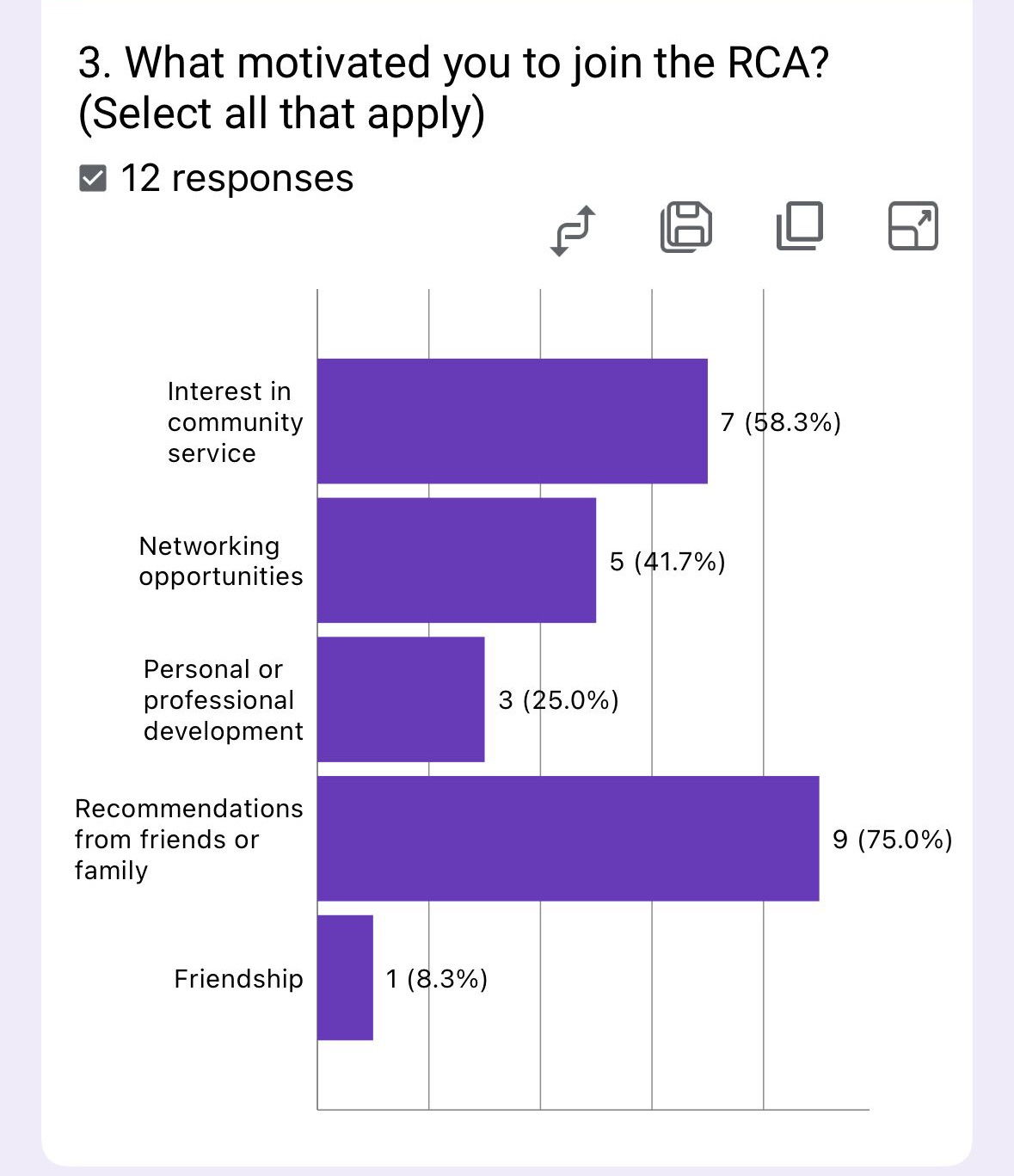
Survey results reveal that personal recommendations (75%) and community service (58.3%) are the primary motivators for joining, while networking (41.7%) and development (25%) play secondary roles. Friendship was rarely cited (8.3%).
Recommendations:
- Strengthen referral incentives to leverage the powerful word-of-mouth channel,
- Highlight service opportunities in recruitment materials,
- Develop structured networking components to better serve this significant minority, and
- Consider rebranding to emphasize the club’s community impact rather than social aspects. The data suggests members join primarily for purpose-driven reasons rather than social connections.
What motivated you to join the RCA?
Member Engagement Analysis
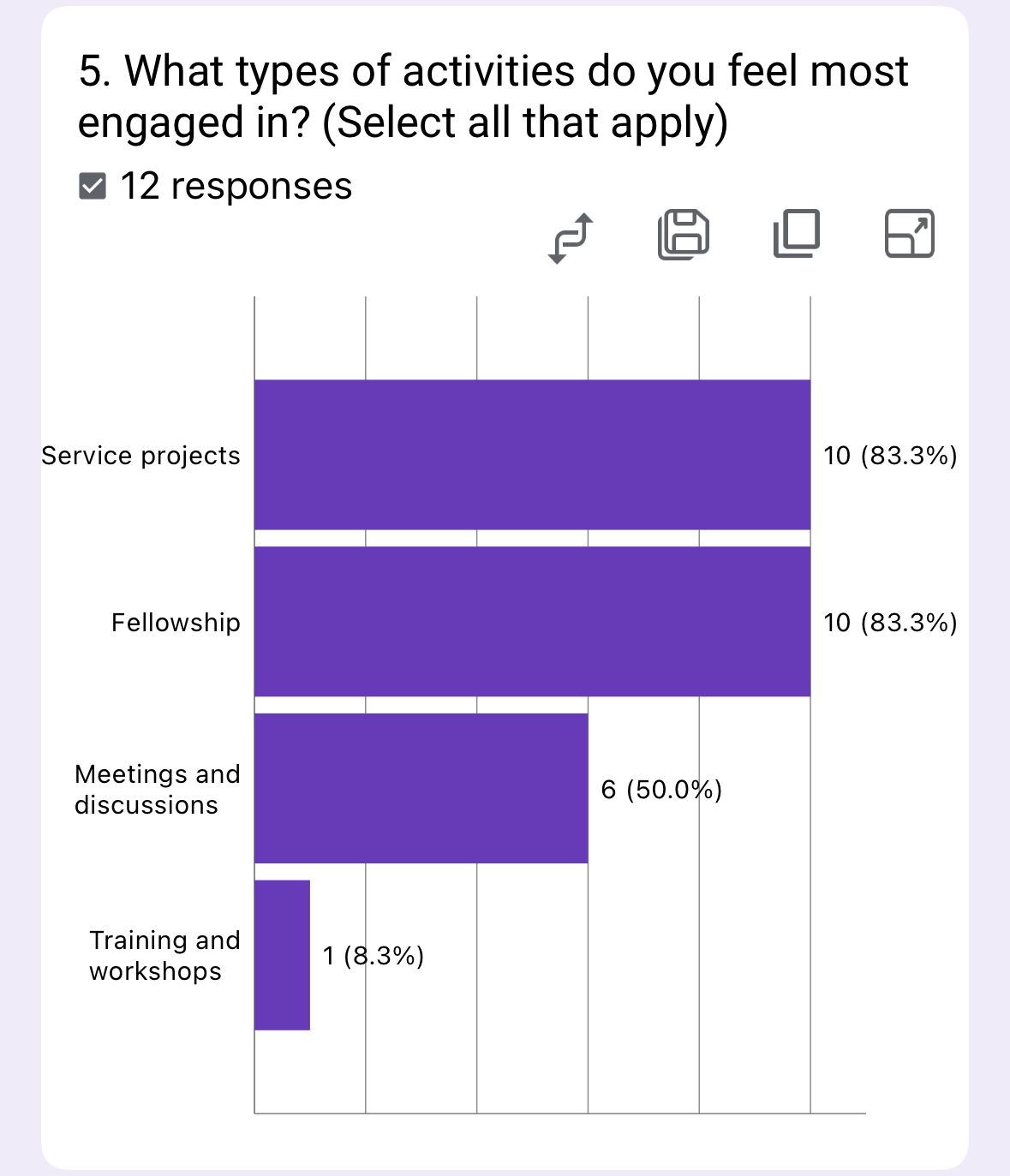
The survey highlights strong engagement with service projects and fellowship (83.3% each), while meetings (50%) and training (8.3%) lag significantly. This suggests members prefer active, purpose-driven experiences over passive learning.
Recommendations:
- Maintain the current balance of service and social activities,
- Revamp meetings to be more interactive and action-oriented,
- Convert some training into hands-on service learning opportunities,
- Consider reducing workshop frequency in favor of more applied experiences, and
- Develop hybrid activities that combine service with skill-building. The club should focus on its strengths while creatively addressing weaker engagement areas.
What types of activities do you feel most engaged in?
Membership Value Analysis
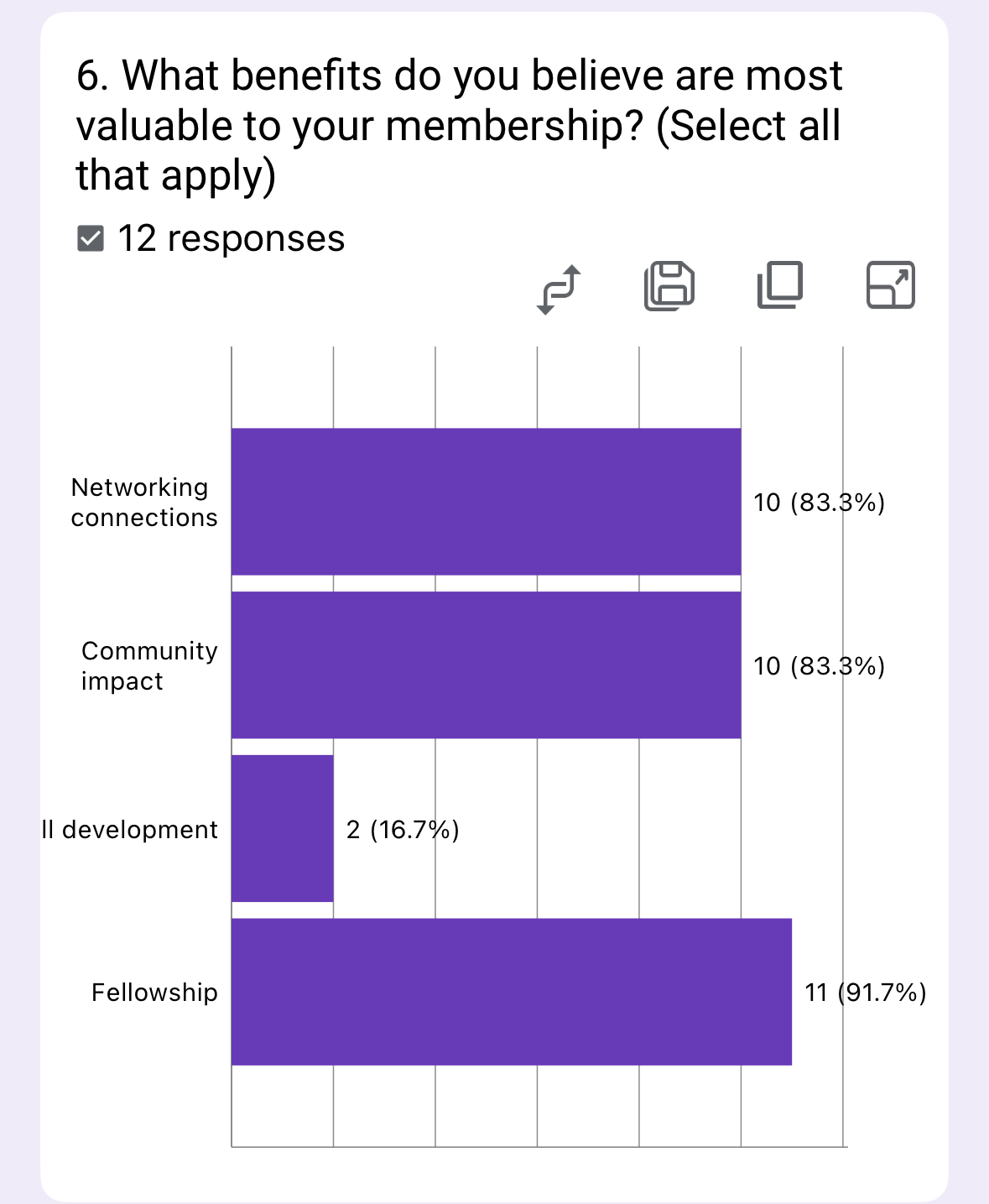
The survey reveals fellowship (91.7%) as the most valued benefit, closely followed by networking and community impact (83.3% each). Personal development trails significantly (16.7%). This indicates members prioritize social connections and collective impact over individual growth.
Recommendations:
- Strengthen fellowship opportunities through structured social events,
- Maintain focus on meaningful community projects,
- Enhance networking through interest-based subgroups, and
- Consider rebranding professional development offerings to better align with member values, perhaps framing them as “collective skill-building for greater impact.”
What benefits do you believe are most valuable to your membership?
Service Project Preferences Analysis
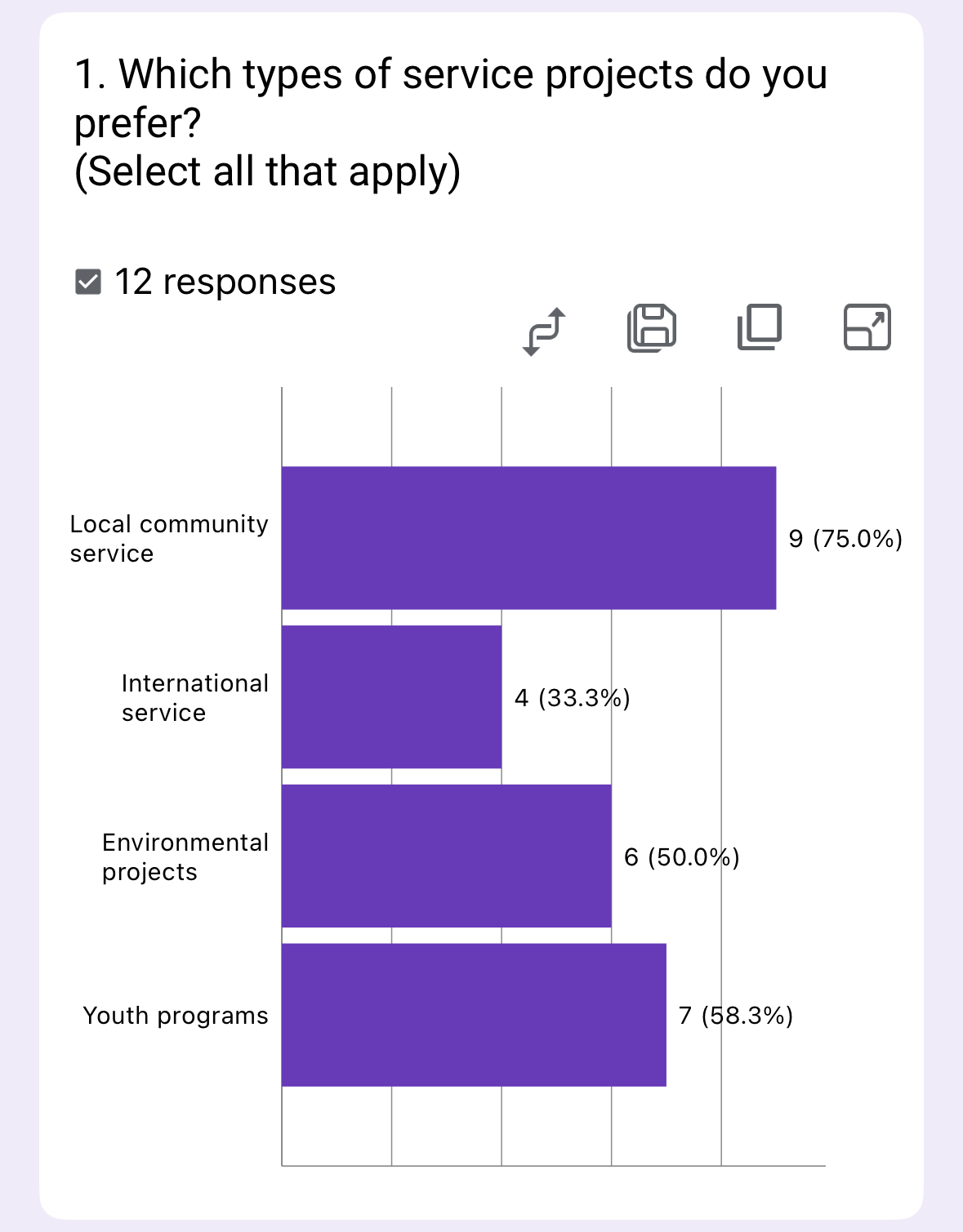
The survey shows strong preference for local community service (75%) and youth programs (58.3%), with moderate interest in environmental projects (50%) and less in international service (33.3%).
Recommendations:
- Maintain focus on local initiatives as they resonate most with members,
- Develop more youth-focused programming,
- Continue offering environmental options for the significant group interested,
- Consider scaling back international projects or reframing them as local-global connections, and
- Explore hybrid projects combining popular categories (e.g., local youth environmental initiatives) to maximize engagement across interest areas.
Which types of service projects do you prefer?
Social Activity Preferences Analysis
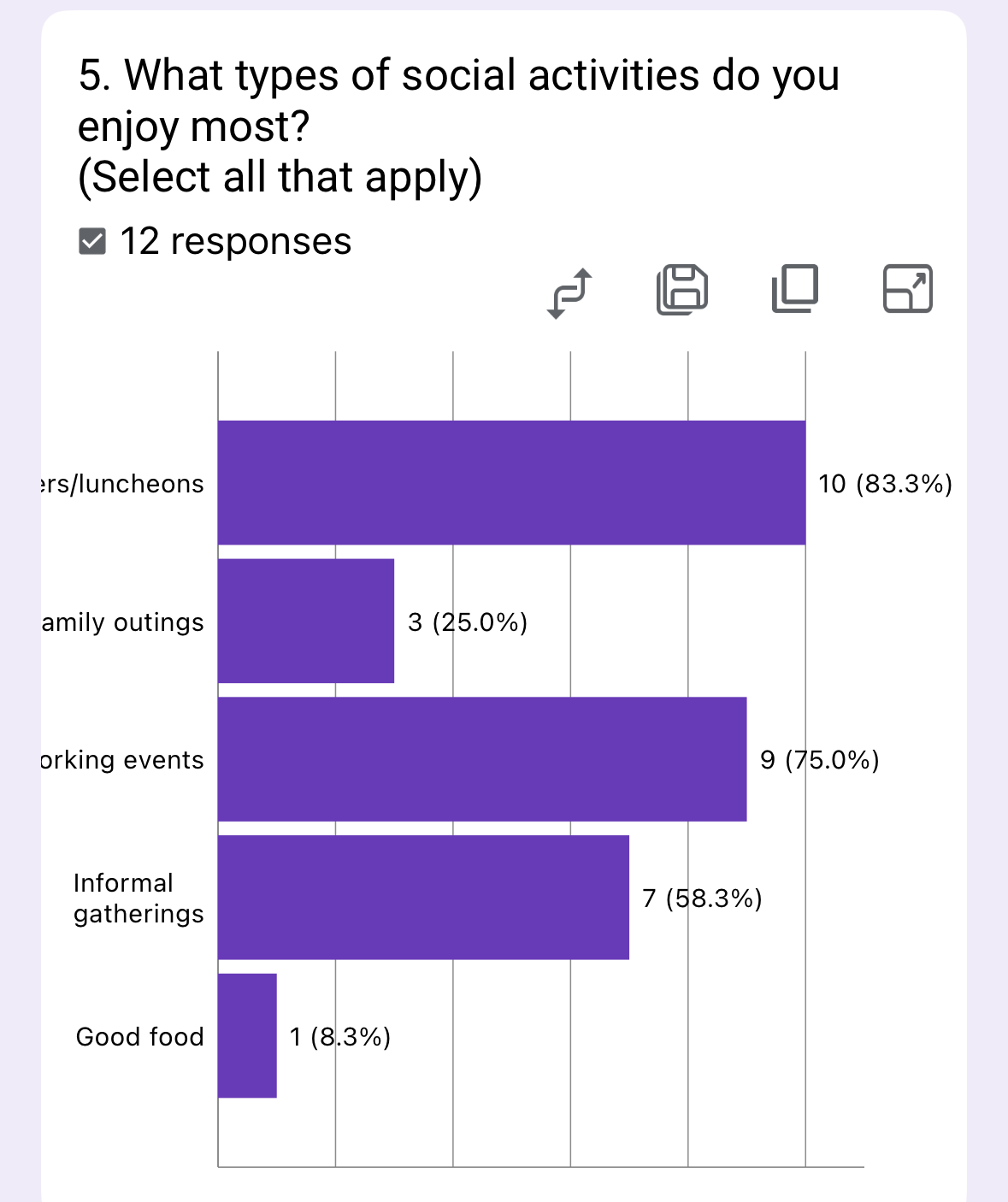
The survey indicates strong preferences for dinners/luncheons (83.3%) and networking events (75.0%), with moderate interest in informal gatherings (58.3%). Family outings received minimal interest (8.3%).
Recommendations:
- Focus on food-based socials as they clearly resonate with members,
- Maintain professional networking opportunities,
- Continue offering casual gatherings for relationship-building,
- Consider discontinuing family-oriented events given low participation, and
- Explore hybrid formats combining dining with networking to maximize engagement. The data suggests members prefer adult-focused, professionally-relevant social interactions.
What types of social activities do you enjoy most?
Member Engagement Level Analysis
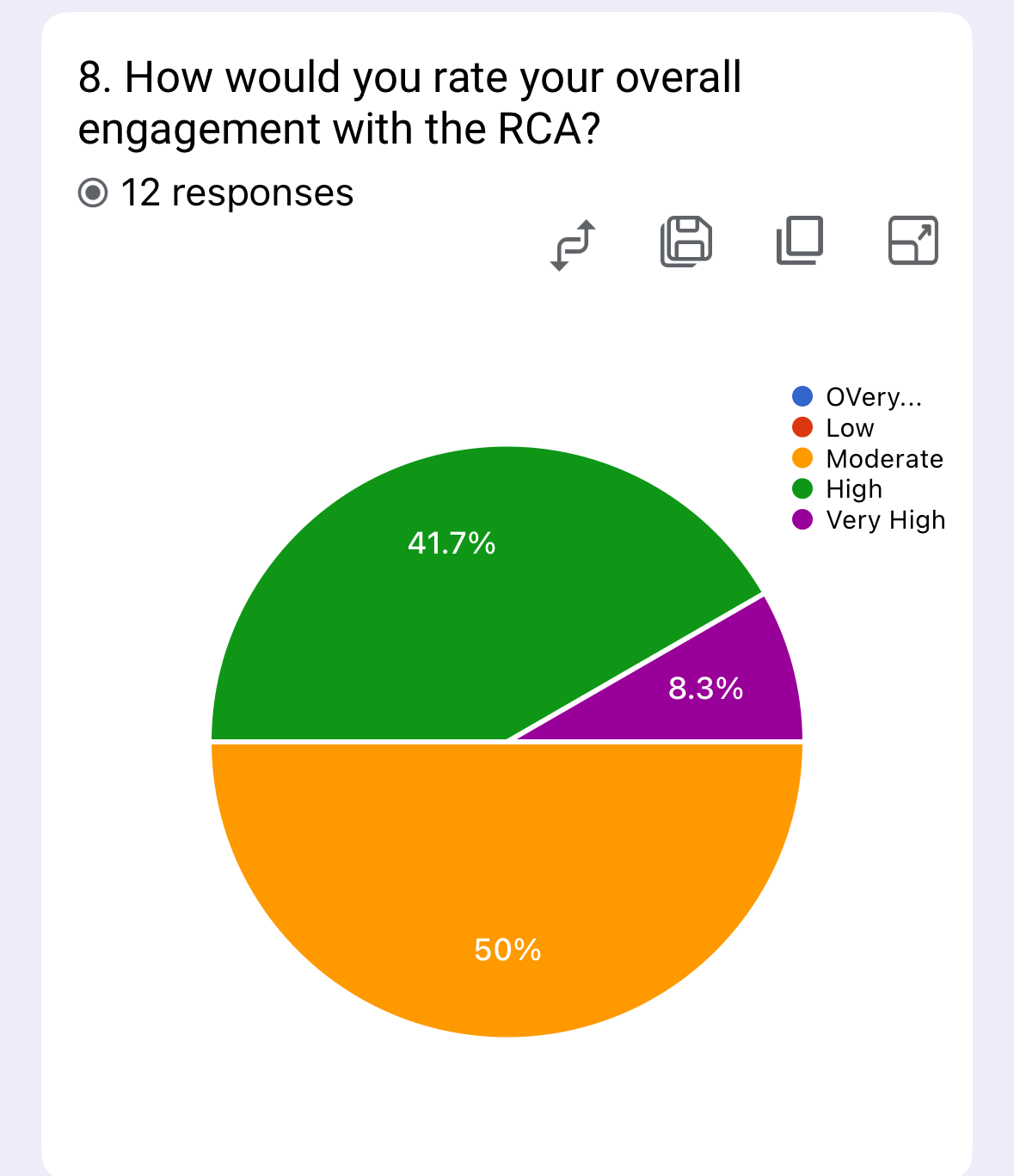
The survey shows a spectrum of engagement: 50% report moderate engagement, 41.7% high engagement, 8.3% very high engagement, and no members reporting very low engagement. This indicates successful engagement strategies with room to elevate more members to higher tiers. Recommendations:
- Study the very high engagement group (8.3%) to identify best practices,
- Create mentorship pairings between very high/high engagers and moderate participants,
- Develop “engagement milestone” recognition to motivate progression, and
- Maintain diverse participation options to sustain all engagement levels. The club’s challenge is converting more moderates to high engagement while preserving its top performers.
How would you rate your overall engagement with the RCA?
Fellowship Participation Analysis
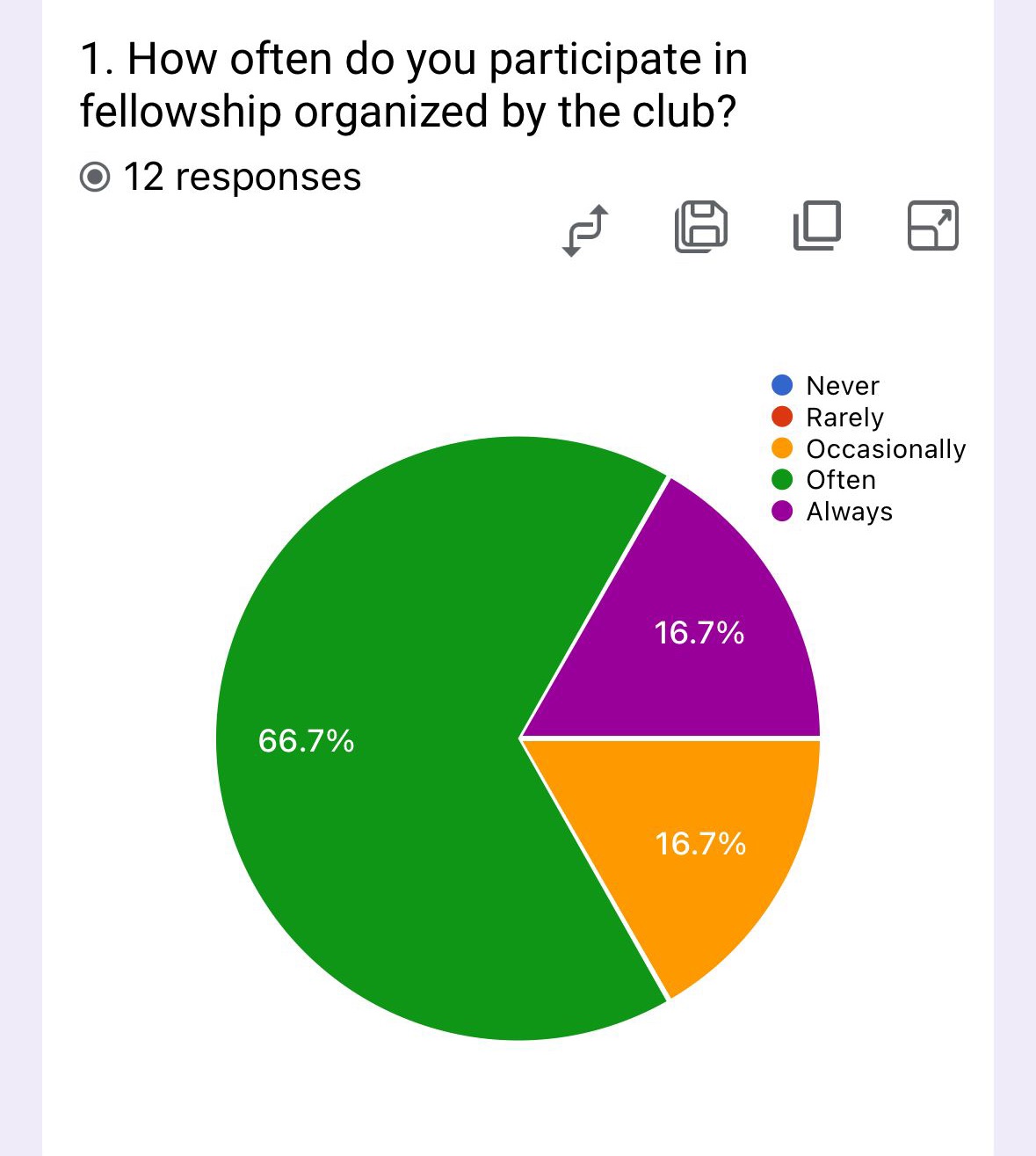
The survey shows varied participation levels: 66.7% participate often, while 16.7% each participate occasionally or always.
Recommendations:
- Implement tiered fellowship events (casual to intensive) to accommodate all participation levels,
- Recognize always-participants as engagement champions,
- Survey often-participants (66.7%) to understand what motivates their consistent involvement, and
- Create special “welcome back” initiatives for occasional participants to boost their engagement frequency. The club should maintain its core programming while developing strategies to convert occasional to frequent participants.
How often do you participate in fellowship organized by the club?
Fellowship Preferences Analysis
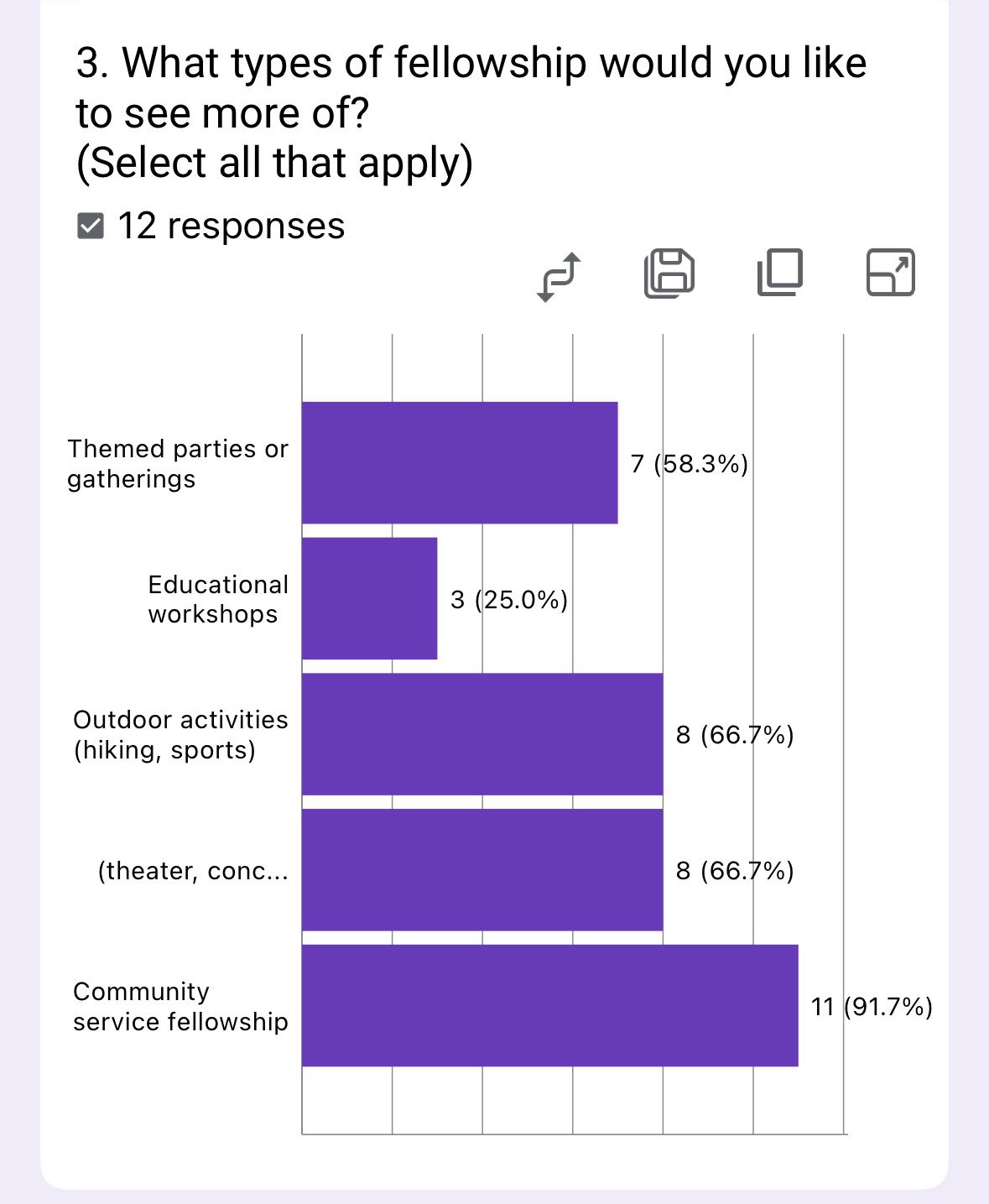
The survey reveals strong preferences for community service fellowship (91.7%) and cultural/outdoor activities (66.7% each), with moderate interest in themed parties (58.3%) and less in educational workshops (25%).
Recommendations:
- Prioritize service-oriented fellowship as it’s nearly universally desired,
- Expand outdoor and cultural activity offerings given their strong appeal,
- Maintain but don’t expand themed socials, and
- Consider integrating educational elements into popular formats rather than standalone workshops. The club should focus on purpose-driven fellowship with active components rather than passive learning experiences.
What types of fellowship would you like to see more of?
Fellowship Satisfaction Analysis
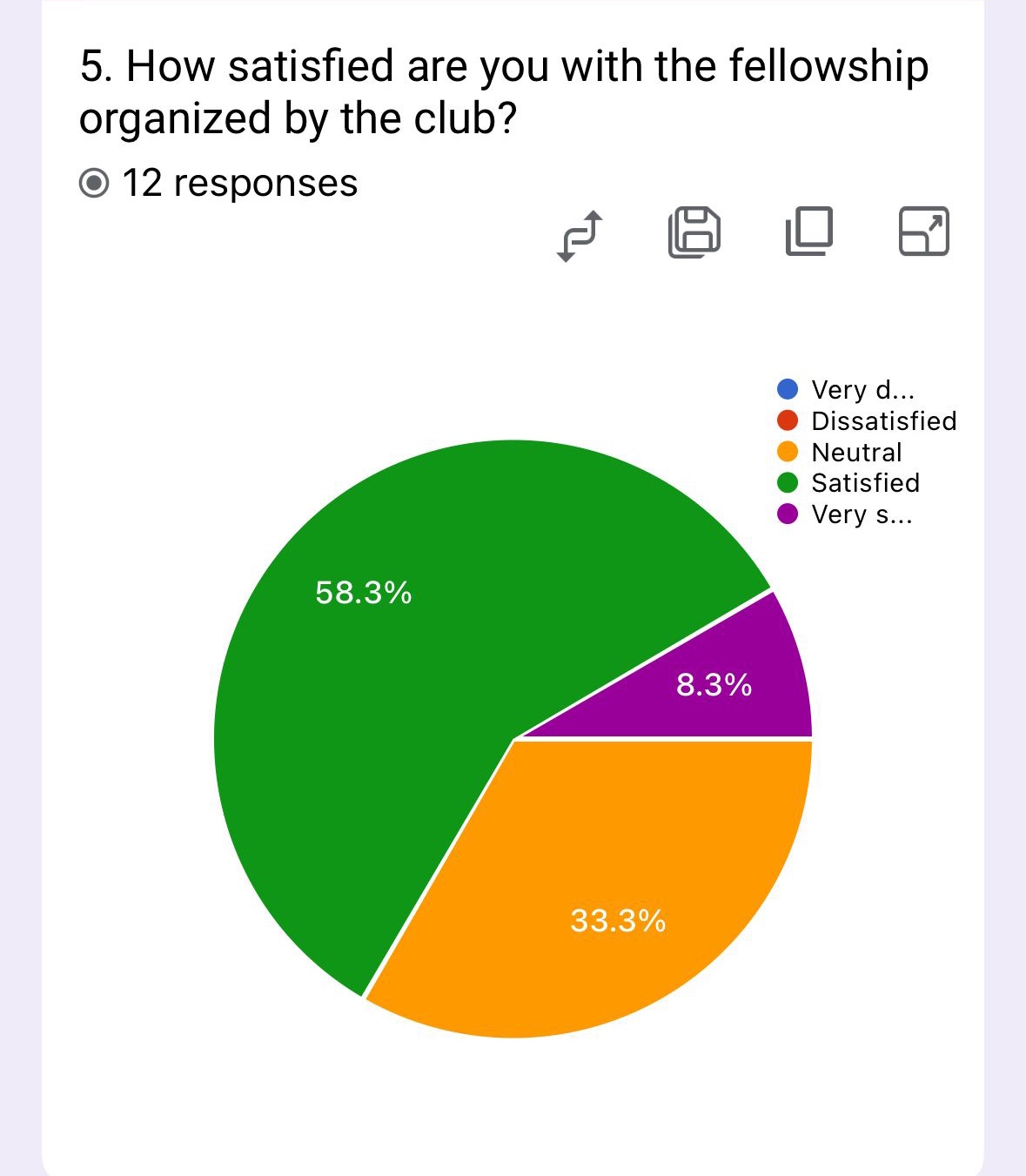
The survey reveals moderate satisfaction levels: 58.3% are satisfied while only 8.3% are very satisfied, with a significant neutral group (33.3%). This suggests fellowship meets basic expectations but isn’t exceeding them.
Recommendations:
- Implement “wow factor” enhancements to convert satisfied to very satisfied members,
- Survey neutral participants (33.3%) to understand missing elements,
- Maintain core programming that satisfies the majority while innovating at the margins, and
- Create a fellowship innovation task force to develop more memorable experiences. The club should focus on elevating good experiences to exceptional ones.
How satisfied are you with the fellowship organized by the club?
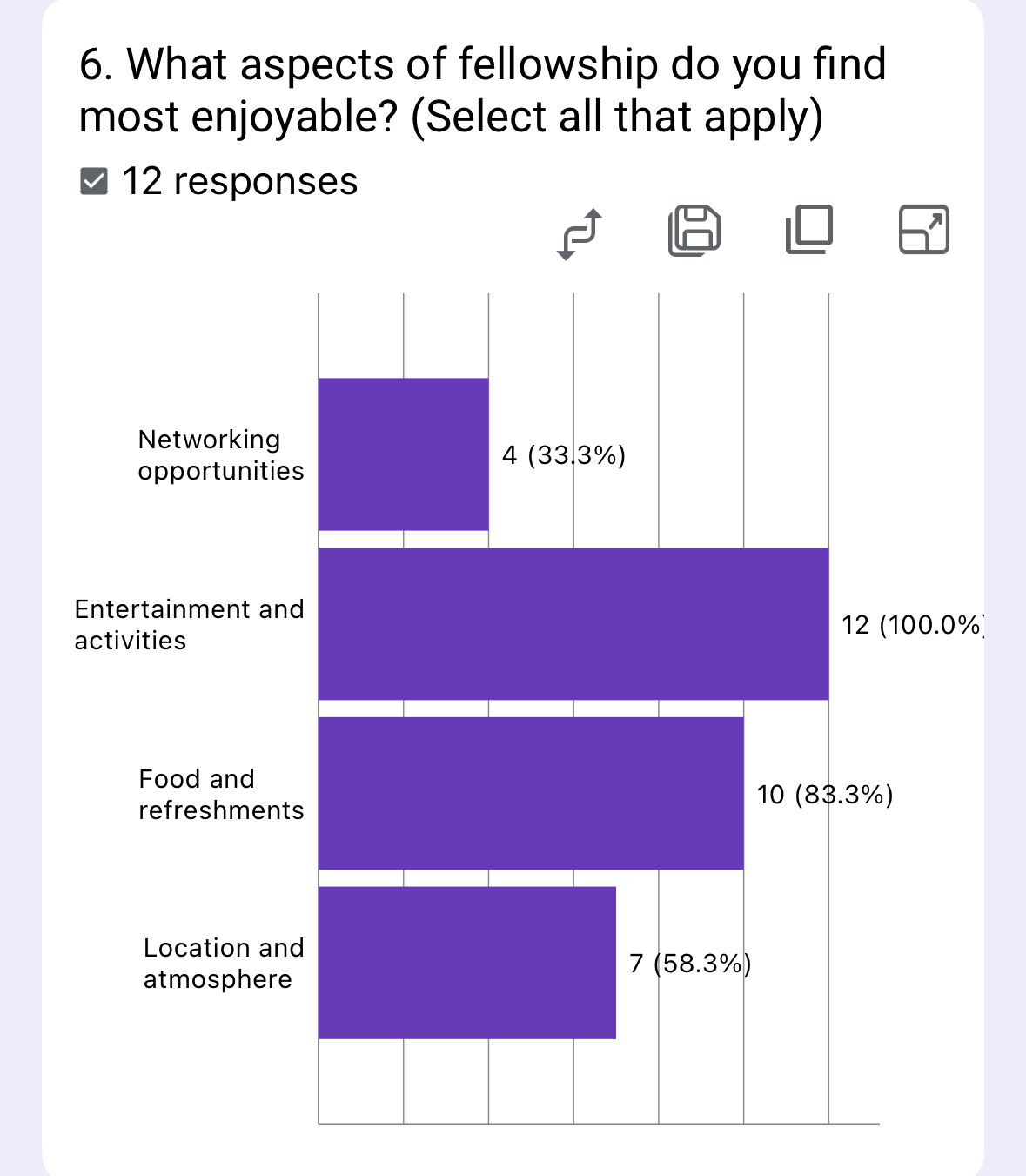
Fellowship Enjoyment Factors Analysis
The survey reveals unanimous appreciation for entertainment/activities (100%), with strong value placed on food/refreshments (83.3%) and moderate importance given to location/atmosphere (58.3%). Networking opportunities ranked lowest (33.3%).
Recommendations:
- Maintain the current focus on quality entertainment programming,
- Continue investing in food offerings as they significantly enhance enjoyment,
- Select venues carefully to support good atmosphere, and
- Consider making networking optional rather than central to fellowship events. The data suggests members prioritize fun, social experiences over professional networking opportunities in fellowship settings.
What aspects of fellowship do you find most enjoyable?
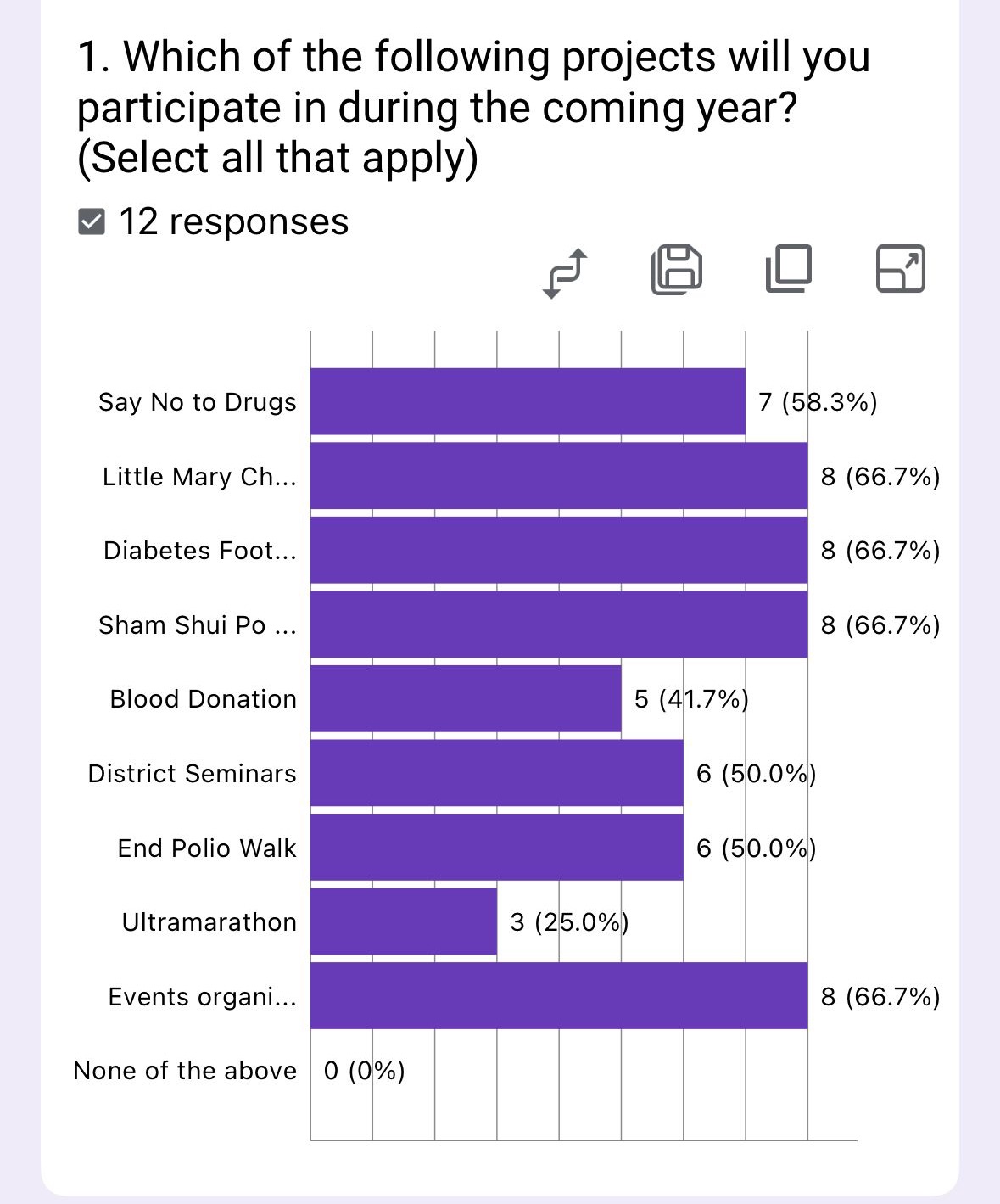
Project Participation Analysis
The survey shows strong interest in multiple projects (66.7% participation rate for 5 initiatives), with health-focused programs slightly more popular than awareness campaigns. All members plan to participate in at least one project.
Recommendations:
- Prioritize the five most popular projects (Little Mary, Diabetes, Sham Shui Po, Events organization, and Say No to Drugs),
- Make awareness to members on District Events and encourage participations(Blood Donation, District Seminars, End Polio Walk, Ultramarathon), and
- Bundle less popular projects with high-interest ones to boost participation. The club should focus resources on projects with demonstrated member engagement.
Which projects will you participate in during the coming year?
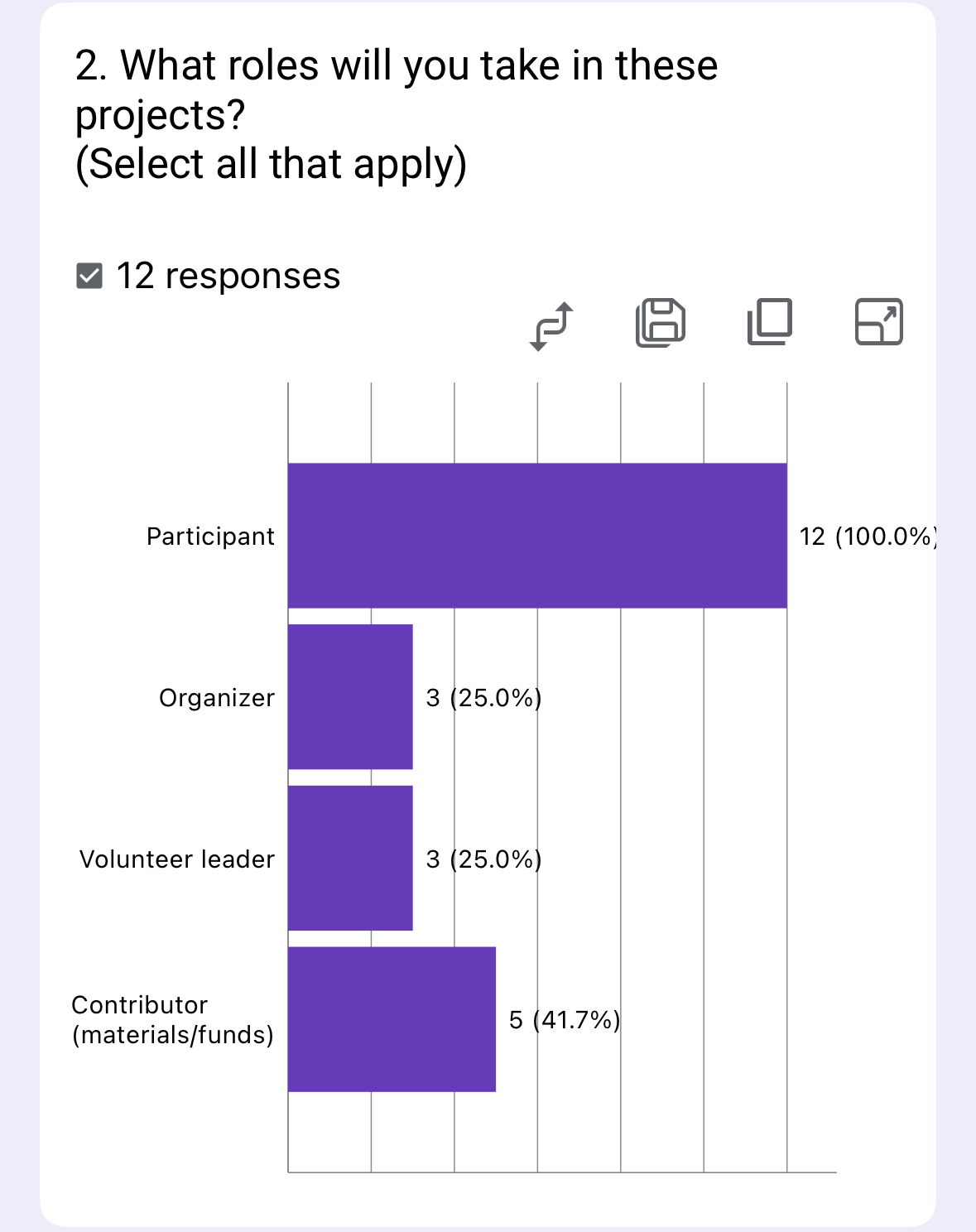
Project Role Preferences Analysis
The survey reveals all members (100%) plan to contribute materials/funds, while 41.7% will serve as volunteer leaders and 25% each as organizers or participants. This shows a strong culture of giving but uneven leadership distribution.
Recommendations:
- Implement leadership training to convert more contributors into leaders,
- Create tiered participation options to gradually increase member involvement,
- Recognize and rotate leadership roles among willing members, and
- Maintain the strong contribution culture while building organizational capacity. The club should focus on developing more project leaders from its pool of active contributors.
What roles will you take in these projects?
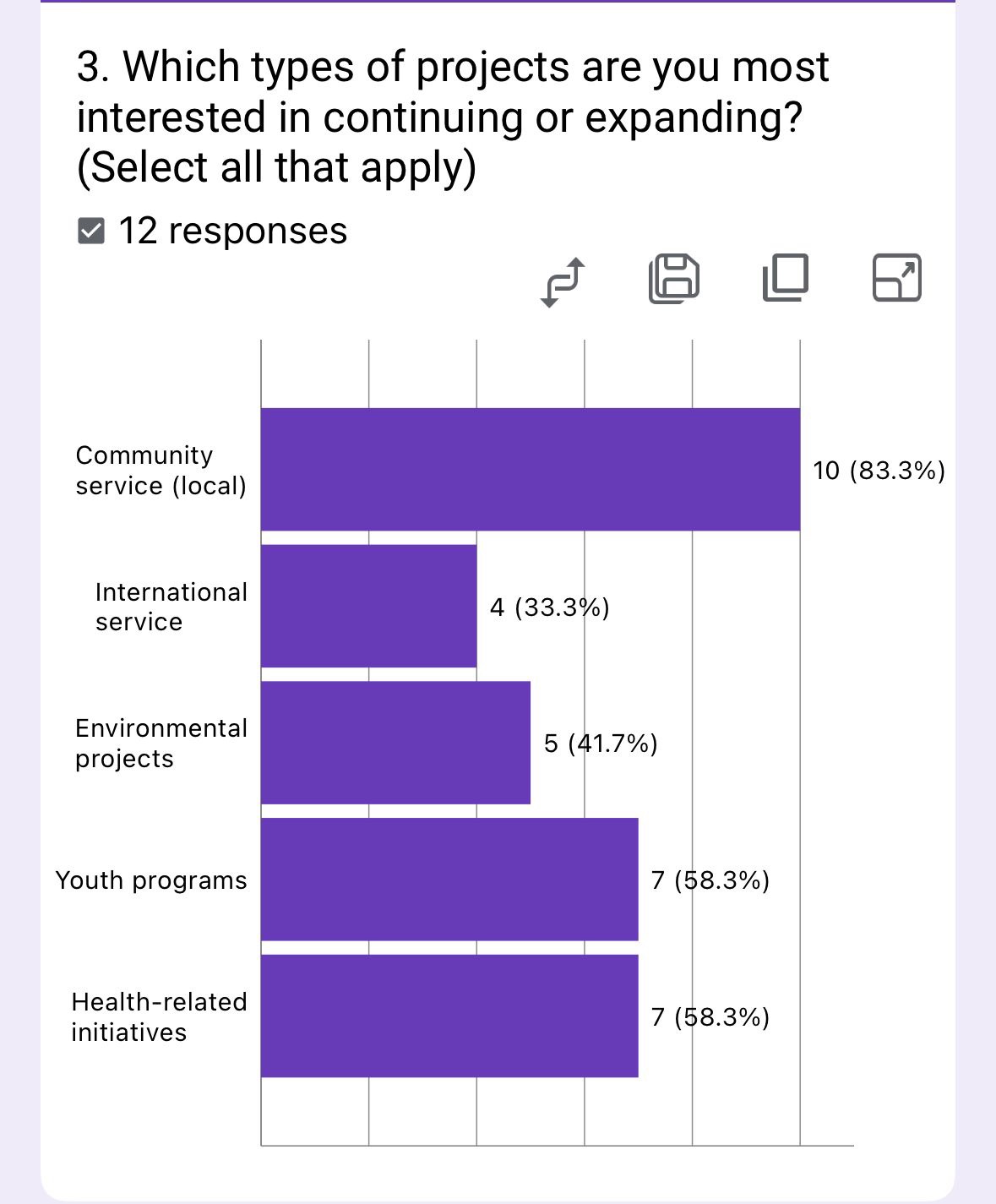
Project Type Preferences Analysis
The survey shows overwhelming preference for local community service (83.3%), with moderate interest in youth programs and health initiatives (58.3% each). Environmental projects (41.7%) and international service (33.3%) were less popular.
Recommendations:
- Prioritize expanding local service projects given their strong appeal,
- Maintain current levels of youth and health programming,
- Improve awareness of potential international projects to encourage international exposure and collaboration, and
- Explore hybrid projects combining popular categories (e.g., local environmental youth programs). The club should focus on initiatives that resonate most with members while maintaining some diversity in project offerings.
Which types of projects are you most interested in continuing or expanding?
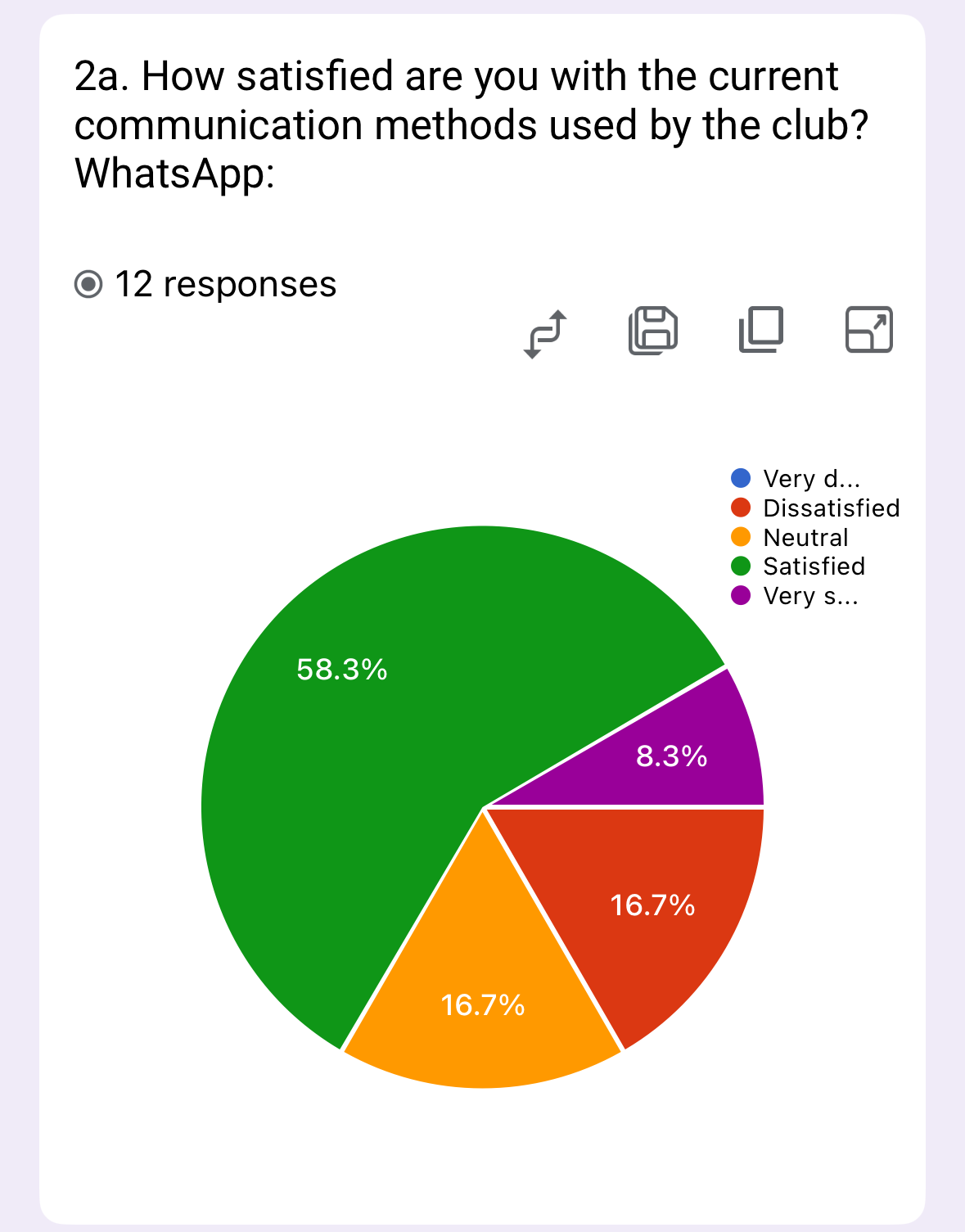
WhatsApp Communication Satisfaction Analysis
The survey shows WhatsApp is meeting basic communication needs (58.3% satisfied), but reveals opportunities for improvement with 16.7% dissatisfied and only 8.3% very satisfied. Recommendations:
- Implement a brief training session on WhatsApp best practices,
- Create message guidelines to reduce clutter while maintaining engagement,
- Survey the dissatisfied group to understand specific concerns, and
- Consider complementary platforms for members preferring alternative communication styles. The club should aim to convert satisfied users to very satisfied while addressing the notable dissatisfaction minority.
How satisfied are you with WhatsApp communication methods?
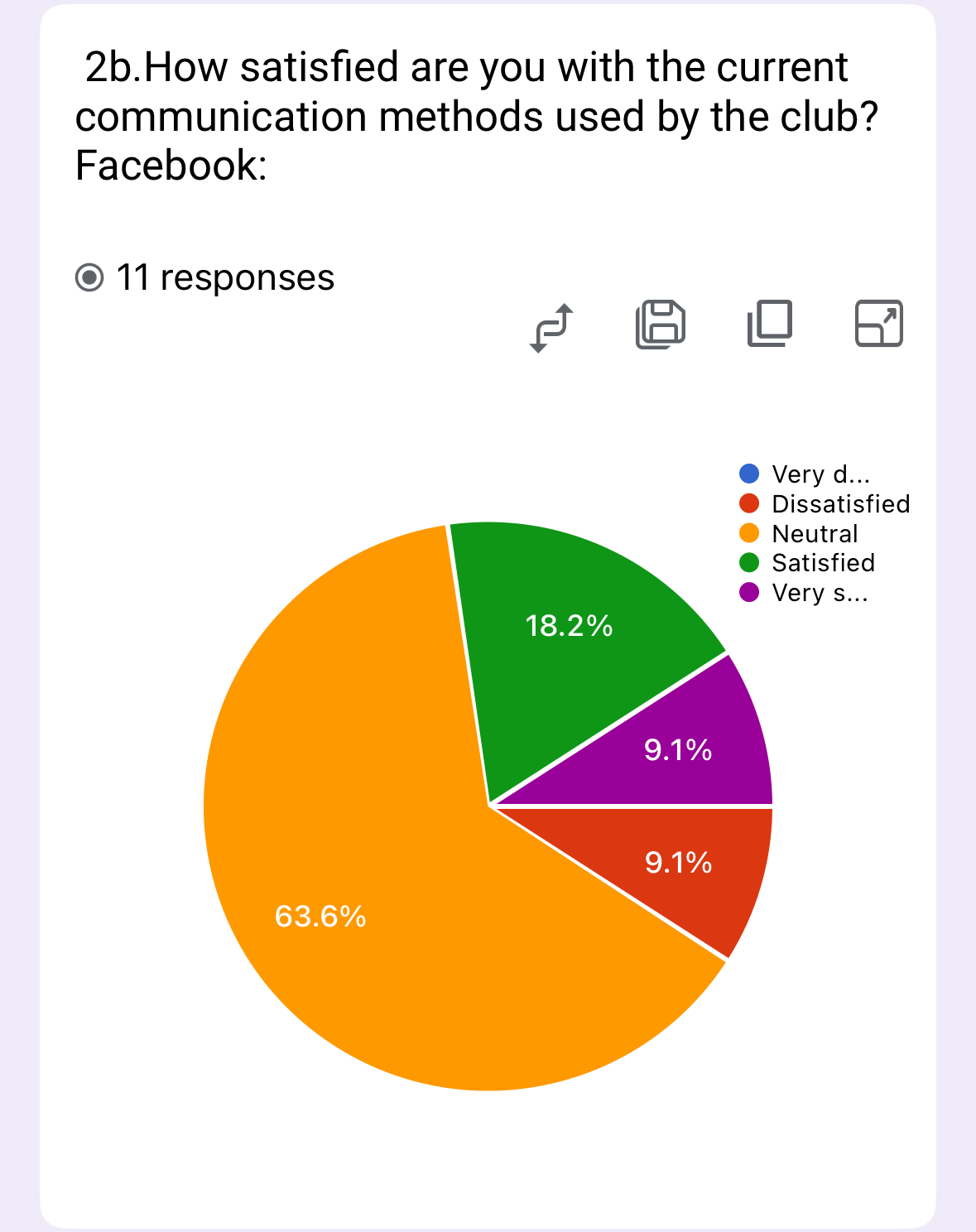
Facebook Communication Satisfaction Analysis
The survey reveals Facebook communications are meeting basic needs (63.6% neutral), but failing to excite members (only 9.1% very satisfied). The 9.1% dissatisfaction rate suggests room for improvement.
Recommendations:
- Enhance Facebook content quality and engagement strategies,
- Implement a feedback system to understand neutral users’ expectations,
- Address specific concerns of dissatisfied members, and
- Explore ways to make Facebook communications more valuable and interactive. The club should focus on converting neutral perceptions to positive ones while maintaining this established channel.
How satisfied are you with Facebook communication methods?
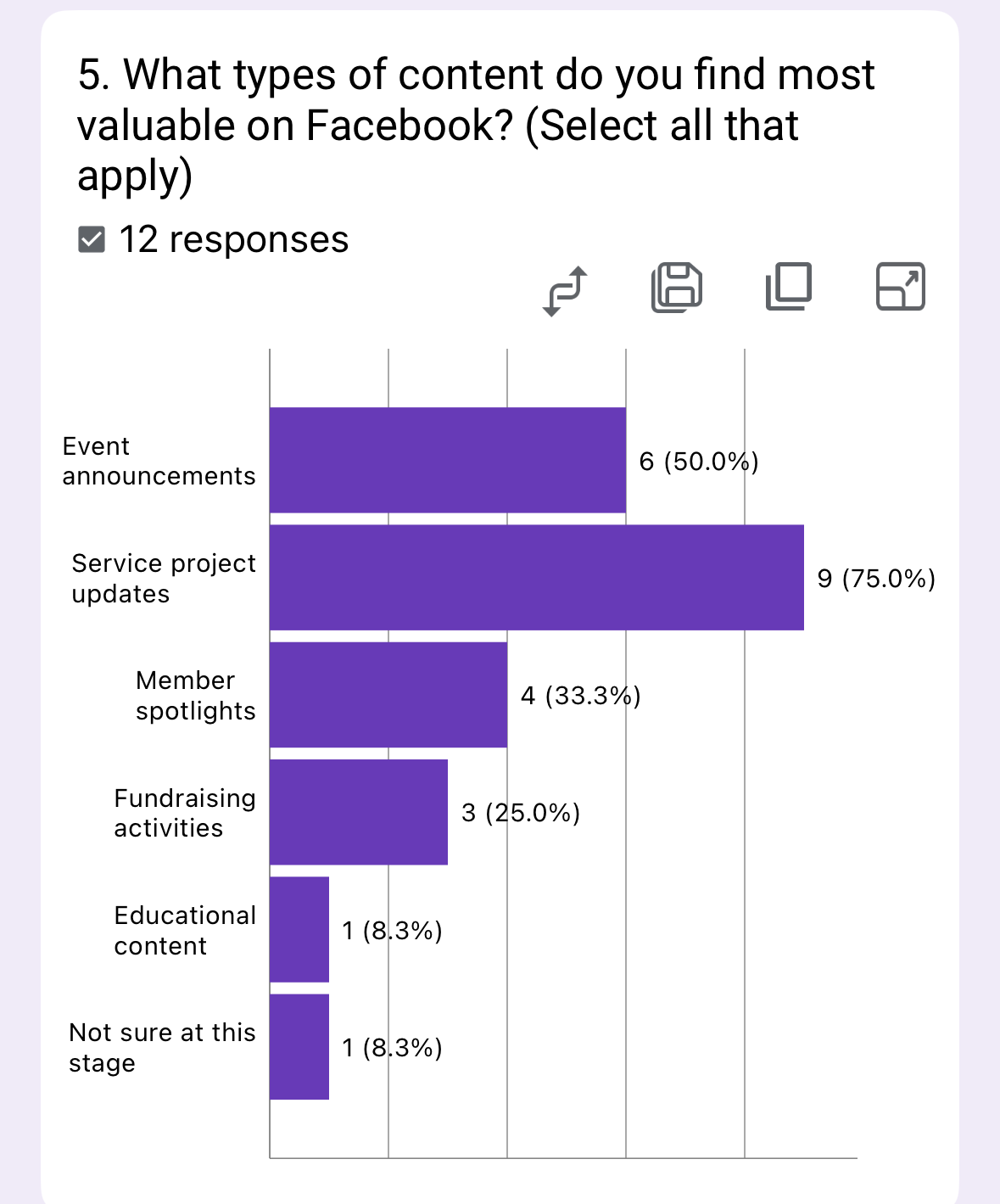
Facebook Content Value Analysis
The survey shows service project updates (75%) and event announcements (50%) are most valued, while member spotlights (33.3%) and fundraising content (25%) are less popular. Educational content ranks lowest (8.3%).
Recommendations:
- Prioritize service project coverage as the most engaging content,
- Maintain clear event announcements,
- Reduce frequency of lower-value posts (fundraising, educational), and
- Consider rebranding member spotlights to highlight project contributions rather than personal achievements. The club should focus Facebook content on practical, action-oriented information that directly supports member participation.
What types of content do you find most valuable on Facebook?
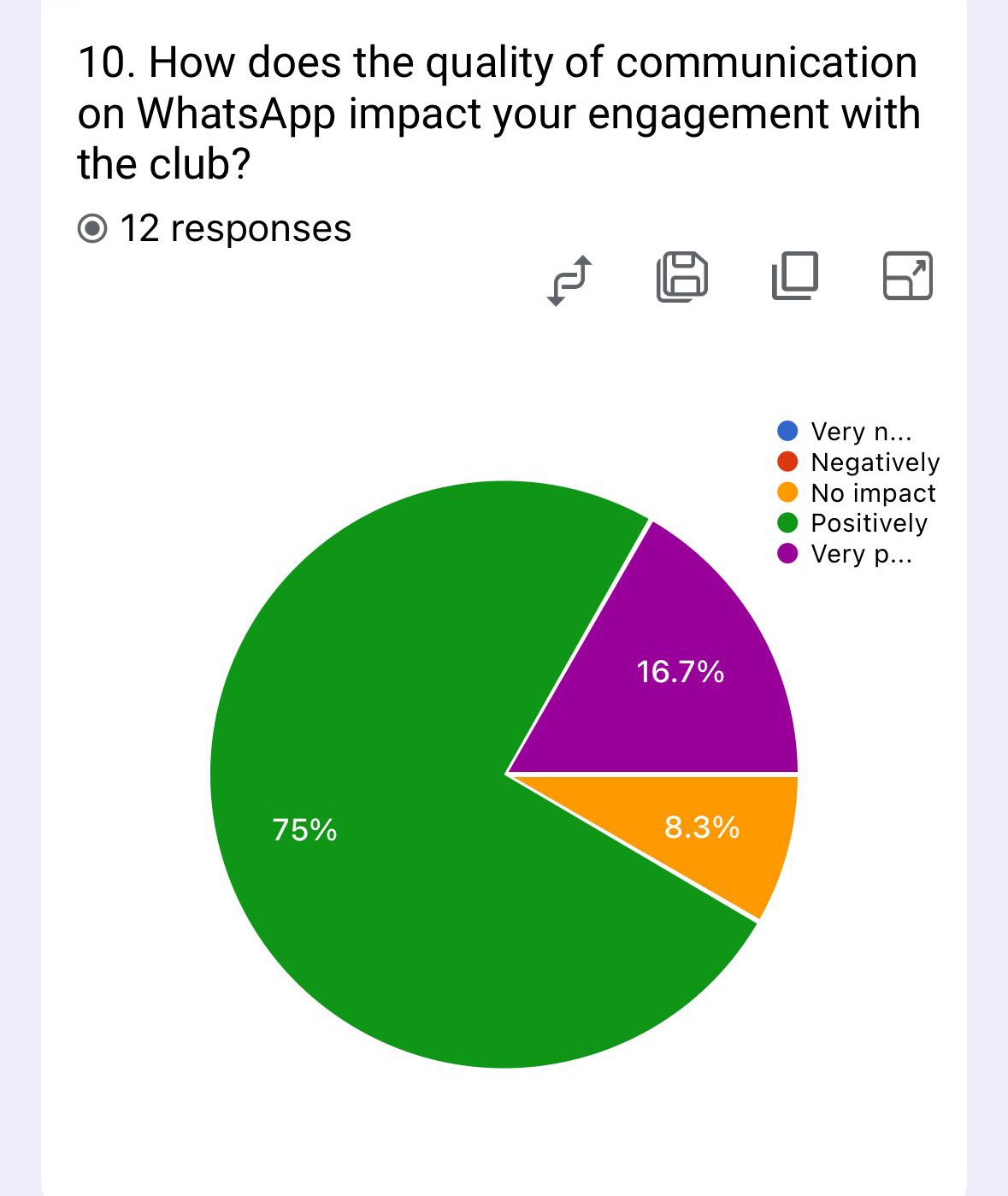
WhatsApp Communication Impact Analysis
The survey reveals WhatsApp strongly supports engagement, with 75% reporting positive impacts and 16.7% very positive effects. Only 8.3% experience low impact.
Recommendations:
- Continue leveraging WhatsApp as a primary engagement channel,
- Implement training to maximize its effectiveness for all members,
- Maintain current communication strategies that yield high positive impact, and
- Explore supplemental channels for the small group less affected by WhatsApp. The club should capitalize on this successful tool while ensuring inclusive communication.
How does WhatsApp communication impact your engagement?
Facebook Communication Impact Analysis
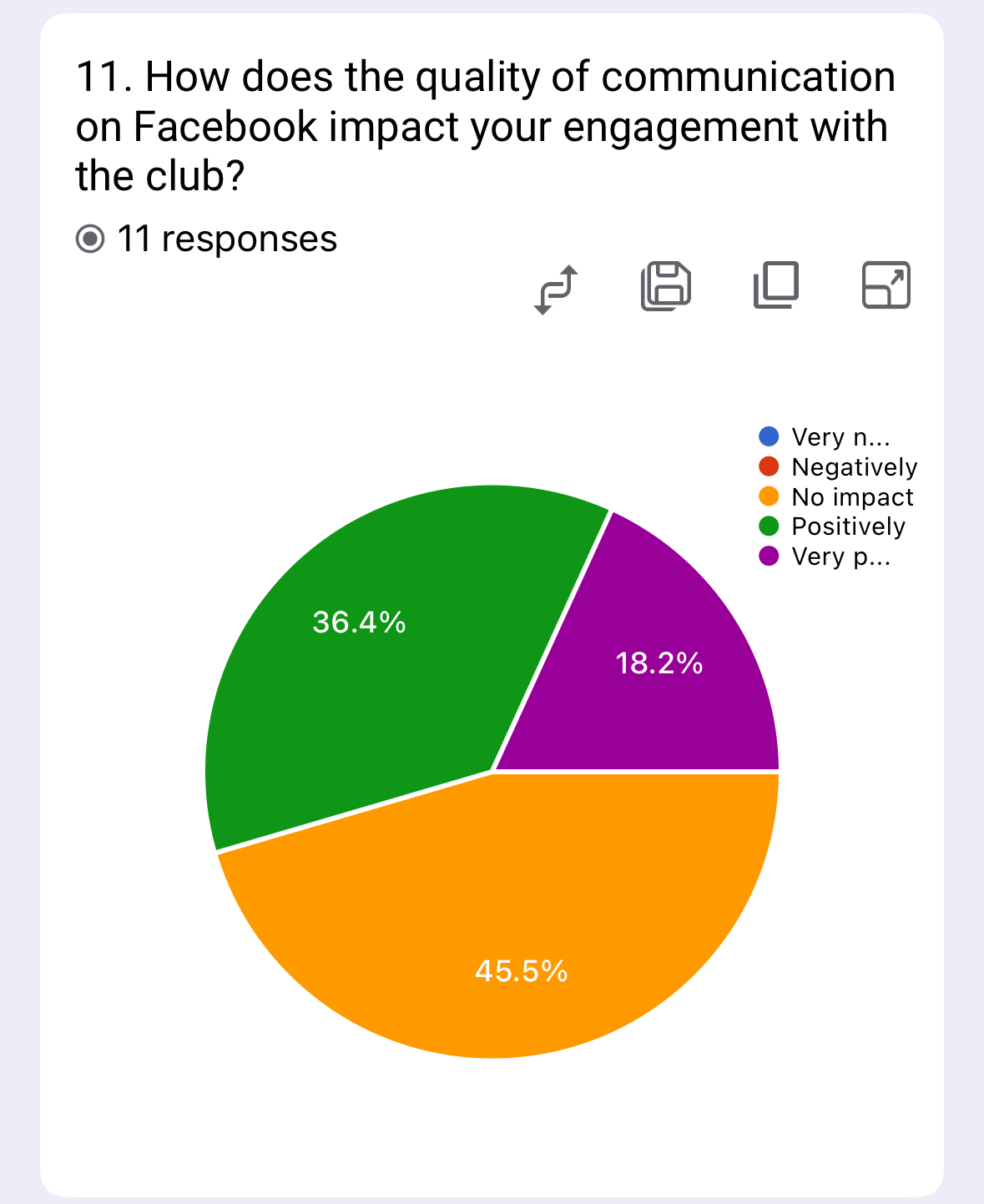
The survey reveals Facebook’s engagement impact is limited, with 45.5% reporting no effect. However, 36.4% experience positive impacts and 18.2% very positive ones, showing potential for improvement.
Recommendations:
- Analyze what drives positive experiences for 54.6% of members and expand those elements,
- Make Facebook content more actionable to convert neutral users,
- Highlight success stories to demonstrate value, and
- Maintain Facebook while strengthening other channels to reach all members effectively. The club should focus on enhancing Facebook’s relevance for the currently unaffected majority.
How does Facebook communication impact your engagement?
External Service Program Participation Analysis
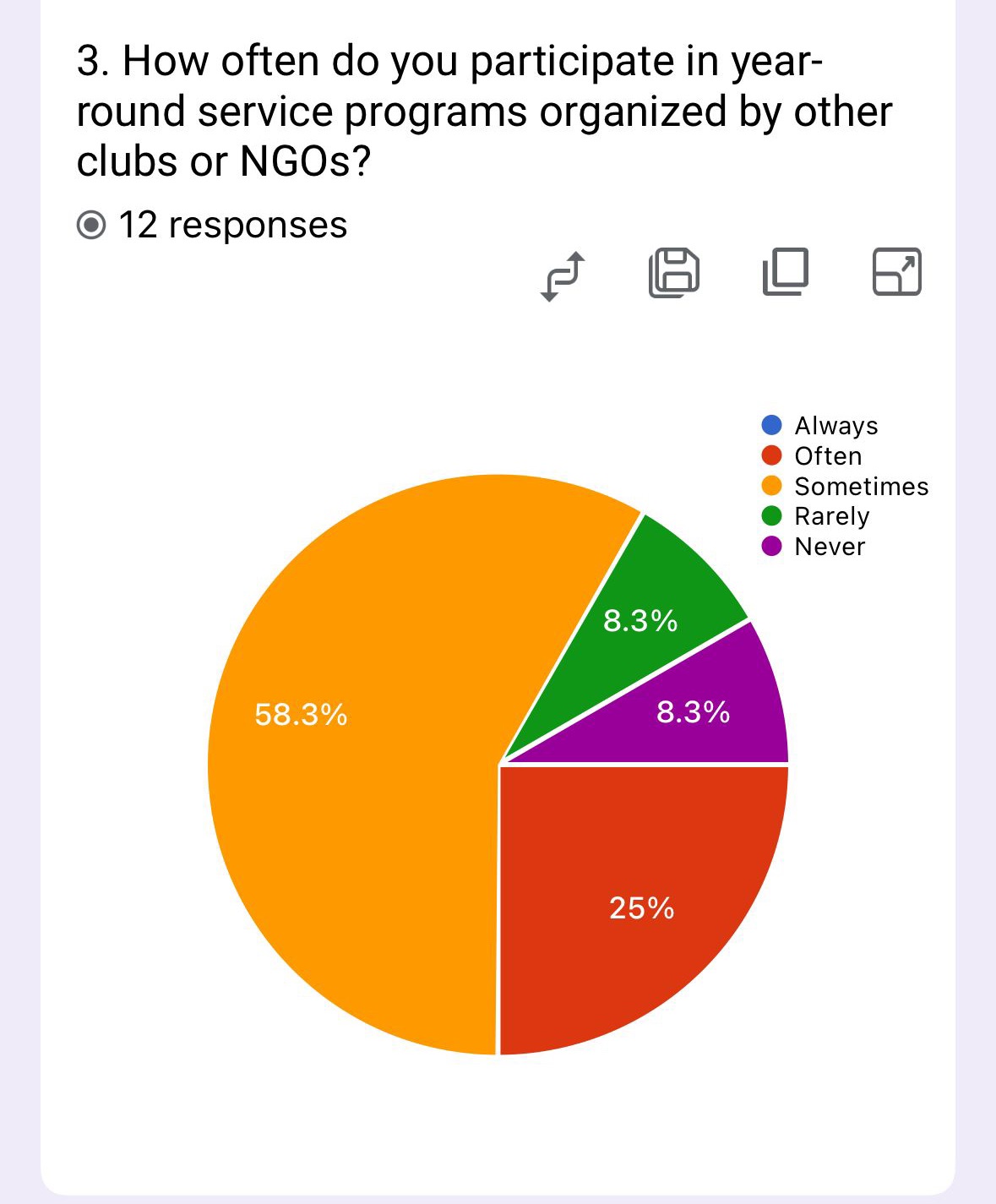
The survey shows moderate external service engagement, with 58.3% participating sometimes and 25% often. Only 8.3% rarely or never join external programs.
Recommendations:
- Identify what motivates the 25% frequent participants to potentially apply to our programs,
- Create bridges for “sometimes” participants to increase their involvement,
- Survey members about preferred external programs for potential partnerships, and
- Respect varying commitment levels when planning service opportunities. The data suggests most members are selectively engaged in external service activities.
How often do you participate in external service programs?
External Service Participation Drivers Analysis
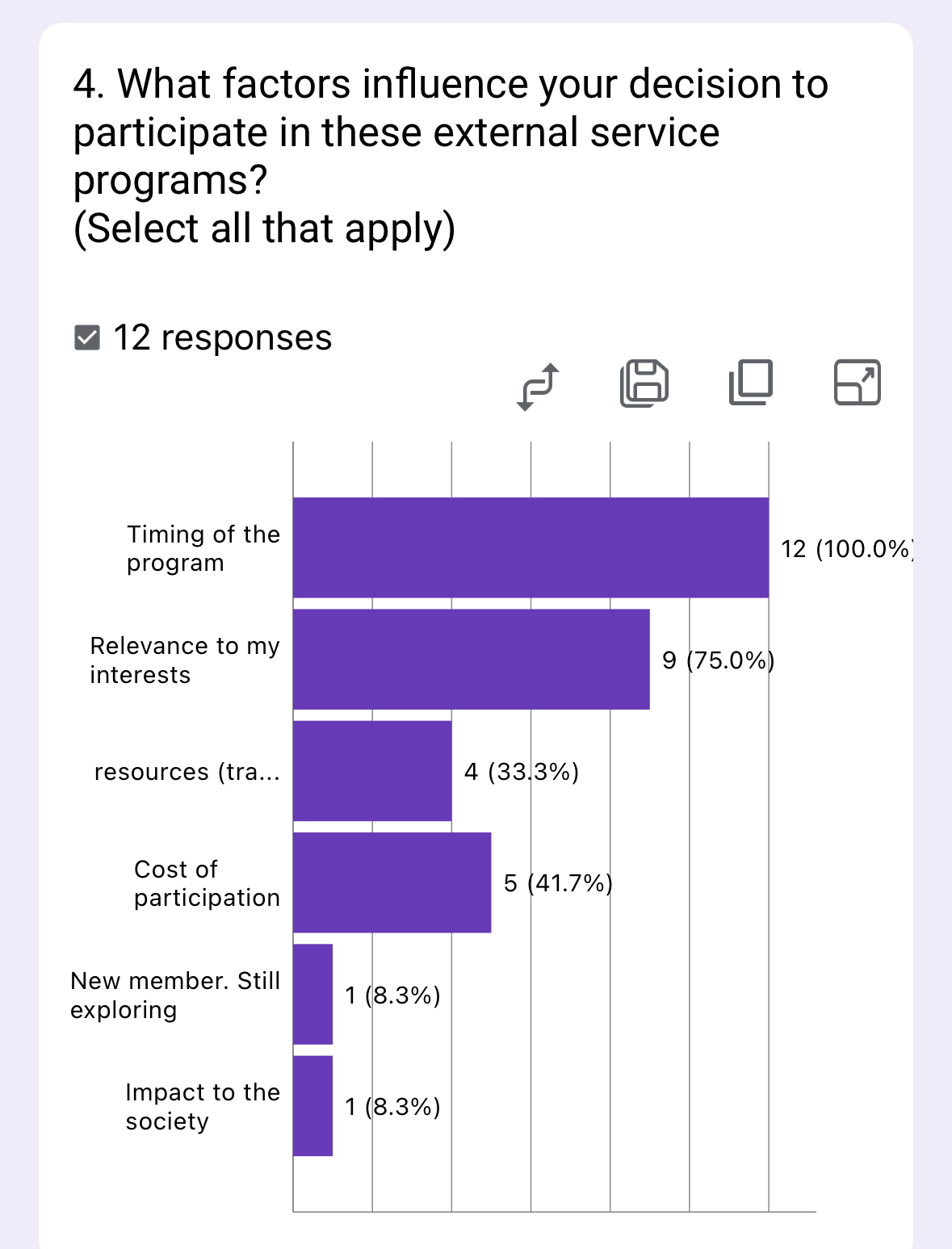
The survey reveals unanimous focus on societal impact (100%) as the key motivator for external service participation, followed by program relevance (75%) and timing (41.7%). Cost and resources were minor factors (8.3% each).
Recommendations:
- Emphasize measurable impact in all service program communications,
- Offer diverse projects to match varied interests,
- Schedule programs at convenient times, and
- Keep costs minimal since they rarely deter participation. The data confirms members prioritize meaningful, well-timed opportunities that align with their values and interests.
What factors influence your external service participation?
Preferred External Service Programs Analysis
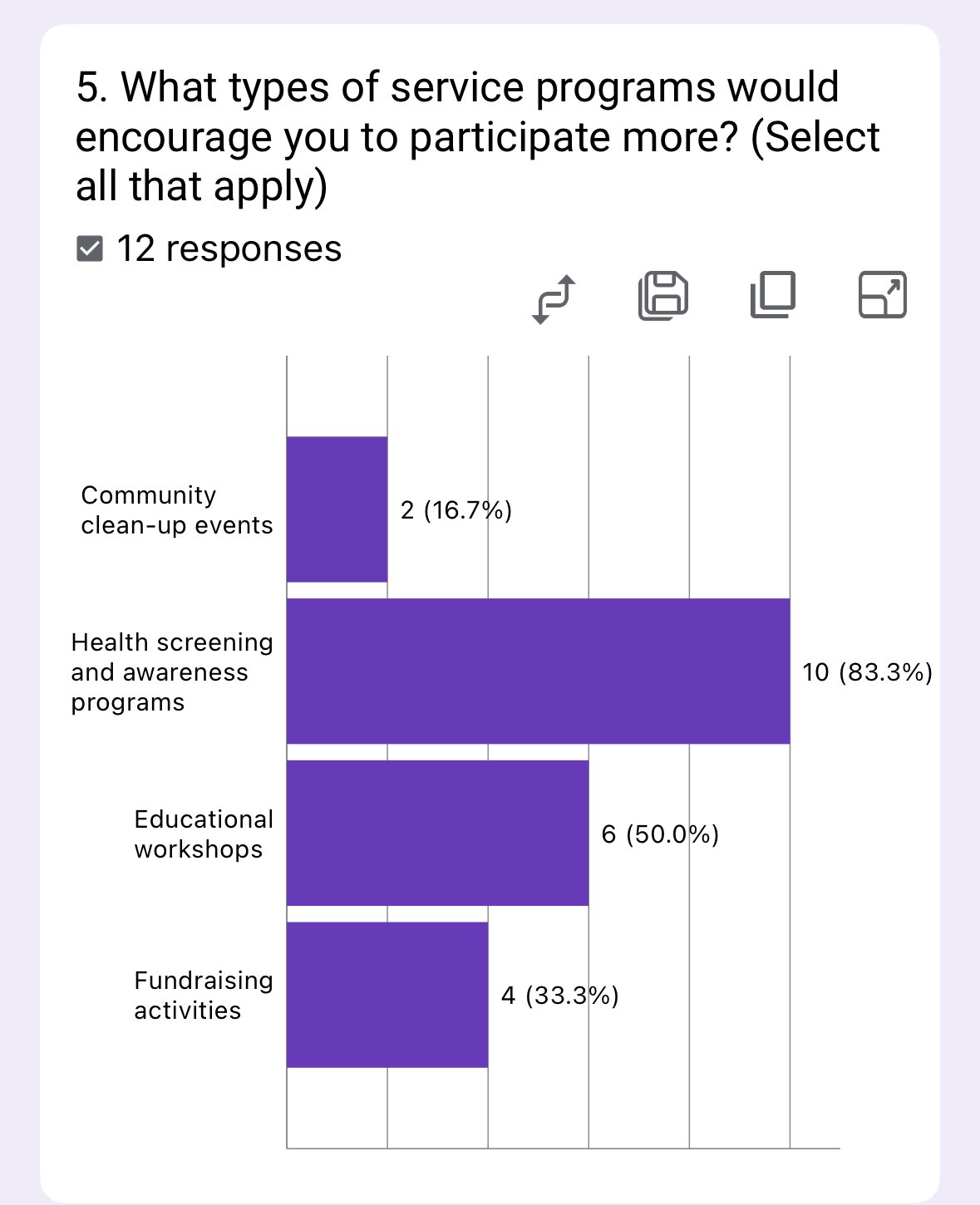
The survey shows strong preference for health screening programs (83.3%) and moderate interest in educational workshops (50%). Fundraising (33.3%) and clean-ups (16.7%) were less popular. Recommendations:
- Prioritize partnerships with health-focused NGOs given overwhelming member interest,
- Maintain some educational collaborations,
- Reduce emphasis on clean-ups unless combined with health elements, and
- Explore hybrid programs that combine health services with education. The data suggests members prefer service that directly improves wellbeing over maintenance or fundraising activities.
What external programs would encourage more participation?
External Collaboration Sentiment Analysis
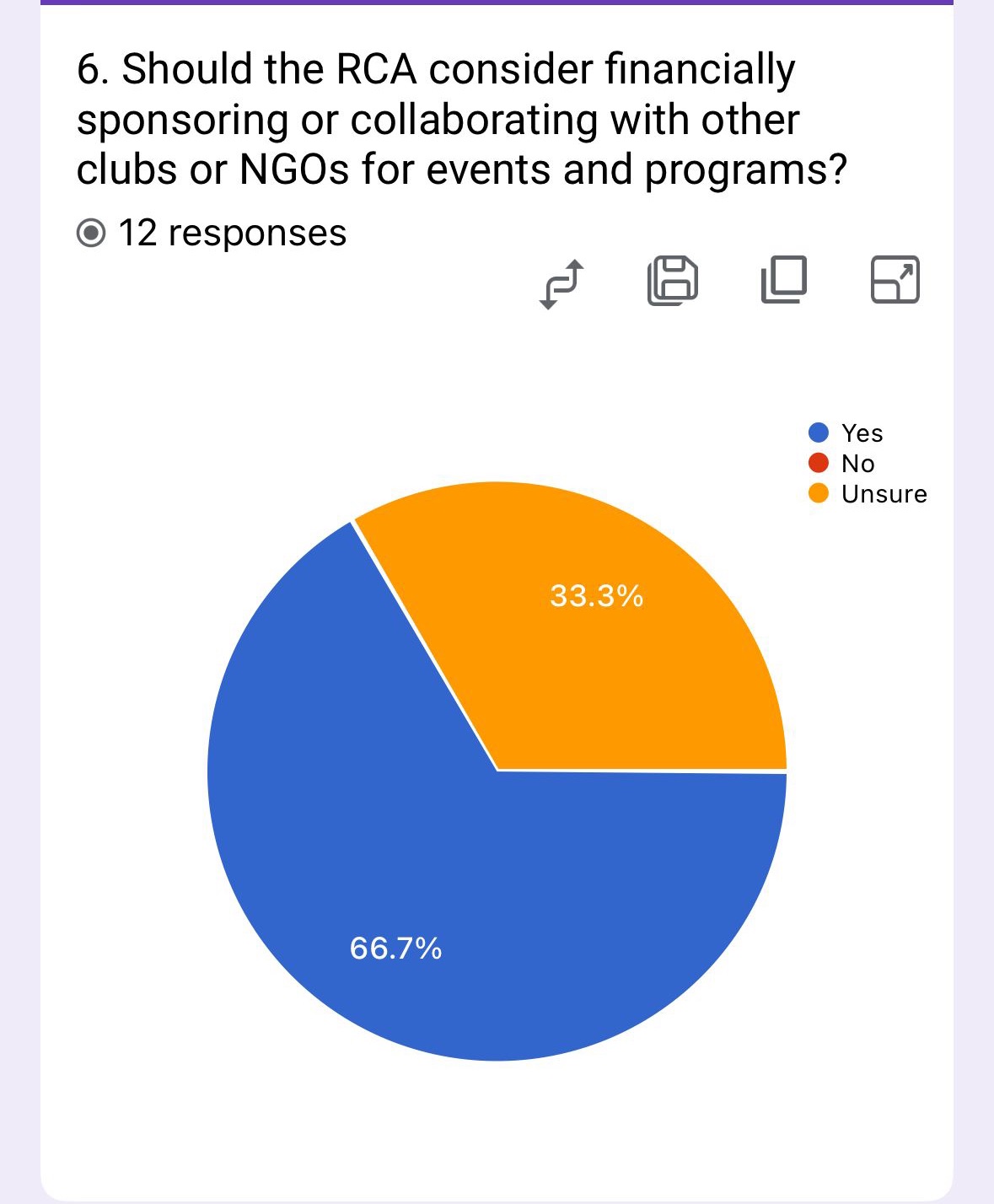
The survey reveals cautious openness to partnerships: 66.7% support external collaborations while 33.3% remain unsure. No members outright opposed the idea.
Recommendations:
- Start with low-risk pilot partnerships to demonstrate value,
- Share success stories from similar organizations to address uncertainties,
- Create clear guidelines for selecting partner organizations, and
- Survey unsure members to understand their specific concerns. The club has an opportunity to explore collaborations while thoughtfully addressing member reservations.
Should RCA sponsor/collaborate with other organizations?
Preferred Collaboration Areas Analysis
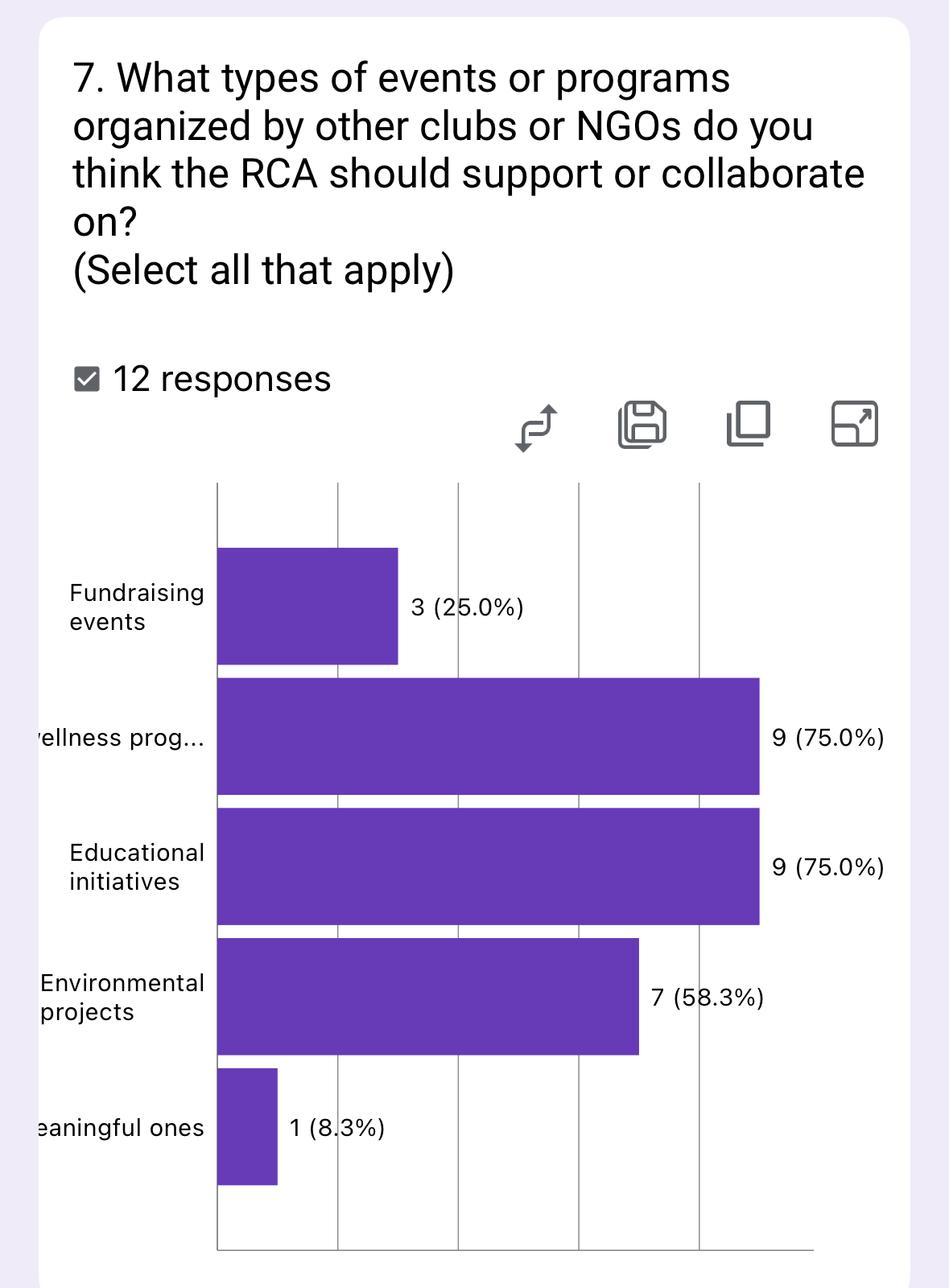
The survey reveals three priority areas for external partnerships: educational initiatives (75%), wellness programs (75%), and environmental projects (58.3%). Fundraising events (25%) and unspecified “meaningful ones” (8.3%) were less popular.
Recommendations:
- Focus partnership efforts on education, wellness and environmental programs,
- Develop clear criteria for collaborator selection in these priority areas,
- Limit stand-alone fundraising collaborations, and
- Conduct follow-up research to better understand the “meaningful ones” category. The club should concentrate resources on the three high-interest areas that strongly align with member preferences.
What external programs should RCA collaborate on?
Financial Resource Prioritization Analysis
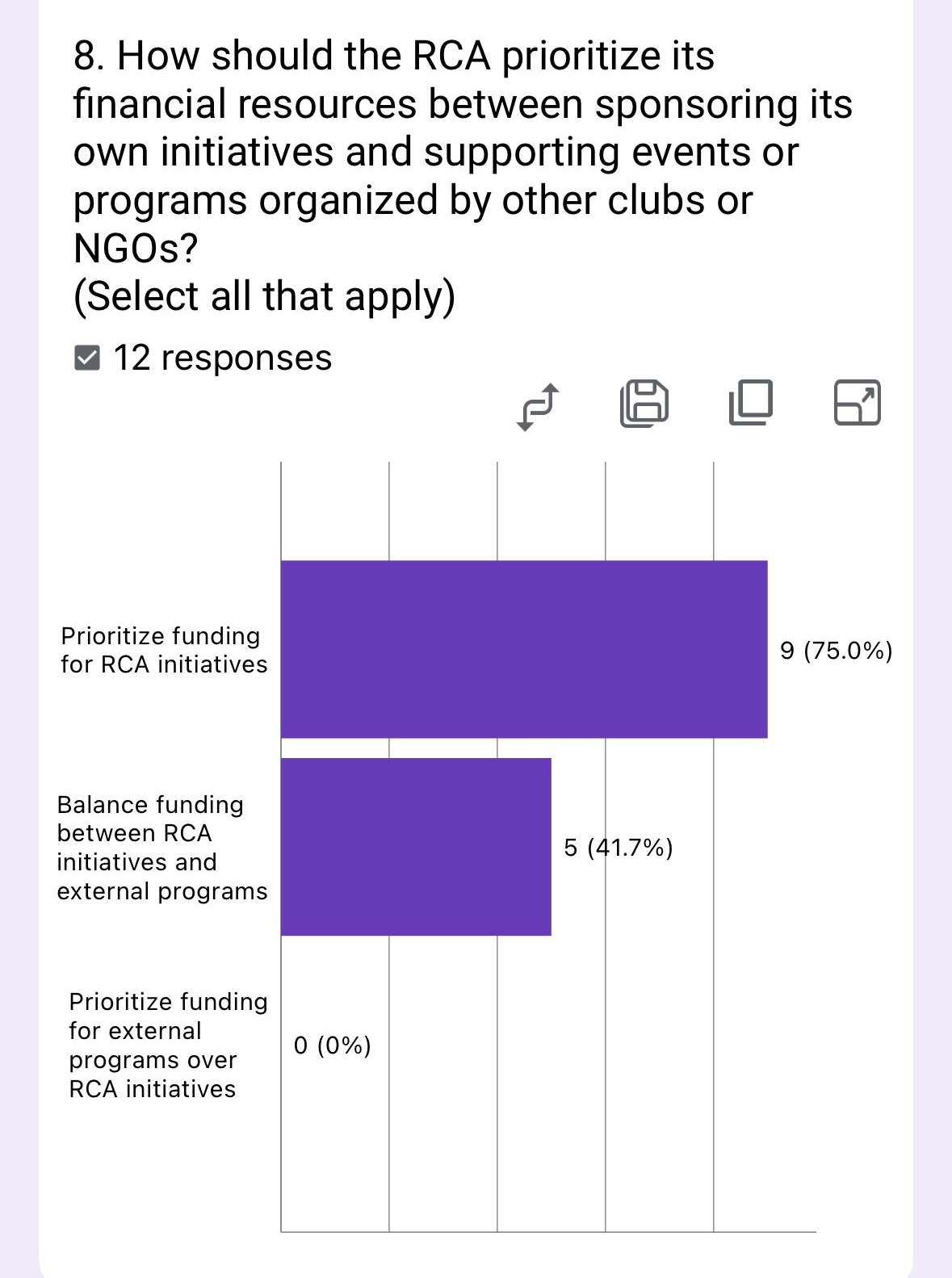
The survey reveals strong support for prioritizing RCA initiatives (75%), with a significant minority (41.7%) advocating for balanced funding. No members supported prioritizing external programs over internal ones.
Recommendations:
- Focus majority funding on core RCA programs that align with member needs,
- Allocate a smaller portion for strategic external partnerships,
- Establish clear criteria for any external funding, and
- Regularly communicate how resources are being allocated to maintain transparency. The data shows members want the club to maintain strong internal programming while being selective about external collaborations.
How should RCA prioritize financial resources?
Sponsorship Decision Criteria Analysis
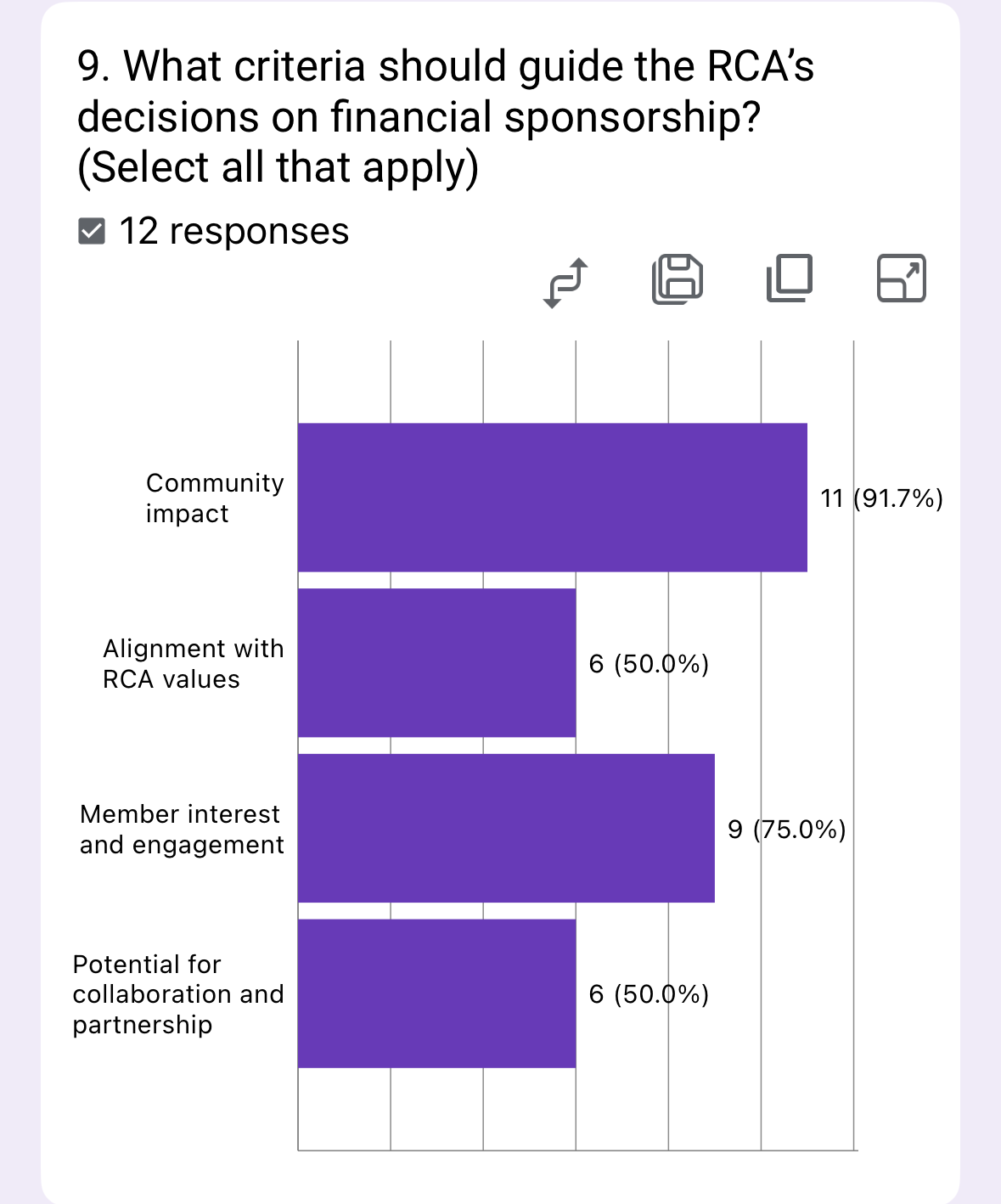
The survey highlights three key sponsorship criteria: alignment with RCA values (91.7%), member engagement (75%), and community impact (50%). Collaboration potential also scored 50%.
Recommendations:
- Develop a sponsorship policy prioritizing value alignment above all,
- Survey members before major sponsorship decisions,
- Focus on high-impact local initiatives, and
- Consider partnerships only when they offer clear mutual benefits. The club should use these member-identified criteria to evaluate all sponsorship opportunities systematically.
What criteria should guide RCA’s sponsorship decisions?

Leave a comment